Ahab’s backstory, Hollywood-style (1926)

sea_beast_film_still_6In which Ahab acquires a love interest, a last name, and a half-brother, not in that order.

The Sea Beast, an adaptation of Moby-Dick, was a huge hit for John Barrymore and for Warner Brothers in 1926. The cast list does not show Ishmael, but it does show Ahab’s half-brother and rival for the affections of Esther Harper, “a minister’s beautiful daughter,” played by Dolores Costello, soon to be Mrs. John Barrymore, and, much later, grandmother of Drew Barrymore.

The Sea Beast retains characters such as Queequeg and Fedallah, the latter played by Sojin Kamiyana, although Winnifred Eaton Reeve (Onoto Watanna) had described his part as being a “coolie” in a 1928 interview with him. 

In Moby-Dick, Ahab explains his motivation to Starbuck as follows:

All visible objects, man, are but as pasteboard masks. But in each event–in the living act, the undoubted deed–there, some unknown but still reasoning thing puts forth the mouldings of its features from behind the unreasoning mask. If man will strike, strike through the mask! How can the prisoner reach outside except by thrusting through the wall? To me, the white whale is that wall, shoved near to me. Sometimes I think there’s naught beyond. But ’tis enough. He tasks me; he heaps me; I see in him outrageous strength, with an inscrutable malice sinewing it. That inscrutable thing is chiefly what I hate; and be the white whale agent, or be the white whale principal, I will wreak that hate upon him.

But Warner Brothers, probably correctly deducing that something a little less metaphysical and “inscrutable” would be likely to bring more patrons into the theater, went with something more familiar to audiences: a love triangle, a vengeful brother,  and a happy ending in which Ahab gets over that obsession with striking the sun if it insulted him and all that.

AFI Catalog Description:

Ahab Ceeley and his half brother, Derek, are rivals for the hand of Esther Harper, a minister’s beautiful daughter. Because Esther favors his brother, Derek pushes Ahab overboard on a whaling trip; Ahab’s leg is chewed off by Moby Dick, a white whale; and he returns to Esther a broken and embittered man. Ahab, believing that Esther no longer loves him, becomes captain of a whaler and obsessively sets out to kill Moby Dick. Ahab learns of Derek’s treachery and, after killing the whale, kills Derek. Ahab return to New Bedford and, his obsession gone, settles down with Esther.

(Incidentally, I pity the poor high school students in 1926  who thought they’d save a little time by basing their book reports on the film version.)

You can see a clip from The Sea Beast here: https://www.youtube.com/watch?v=VVKsRIvSrkk

barrymoremobydickThe movie proved so popular that Warner Brothers made it again, four years later, in what people did not yet call a “reboot” of a “franchise.”

Here’s John Barrymore again, with all the original added features–love interest, vengeful brother–and an added mustache. Queequeg is played by the famous African American actor Noble Johnson, but Fedallah (and Sojin Kamiyana) is gone from the cast list. The love interest, now played by Joan Bennett instead of Dolores Costello, is still a minister’s daughter, this time the child of Father Mapple, who gives the famous sermon early in the novel.

In this 1930 ad from Motion Picture Classic, the film was still sporting the book’s title, Moby Dick (minus the hyphen in Moby-Dick) and some semblance of its original plot:

“Can he win revenge against this awful enemy–or will he perish in the giant maw that has been the graveyard of a hundred men before him?” There’s even a pod of spouting whales, though they’re dwarfed by John Barrymore’s famous profile.

The thing is, though, that in both these versions the white whale is clearly an instrument (Ahab’s “agent”) and not the entity responsible for the action (Ahab’s “principal”). He’s not to blame for taking off Ahab’s leg; it’s the brother’s fault for pushing Ahab overboard. The white whale acts in accordance with its nature, as Mark Twain would say.  Does this render Starbuck’s statement that Ahab’s desire for revenge is “blasphemous” any more or less true? Does Ahab’s quest make more sense if the backstory is a love rivalry?

If you want to challenge yourself with some questions on Moby-Dick, here are some to get you started: https://public.wsu.edu/~campbelld/amlit/mddq.htm

Read the New York Times review of The Sea Beast: http://www.nytimes.com/movie/review?res=9E00E7DA1231EE3ABC4E52DFB766838D639EDE

Bitter Tastes: Literary Naturalism and Early Cinema in American Women’s Writing, 1 September 2016

CAMPBELL Bitter compBitter Tastes: Literary Naturalism and Early Cinema in American Women’s Writing will be out from the University of Georgia Press in September 2016.

Here’s a brief review from the University of Georgia catalog:

“No work that I know of explores in such detail and within the context of a shared literary/aesthetic tradition the incredible number of women writers Campbell’s study covers and, at times, uncovers, resurrecting writers once considered important but then shunted aside by ideologically prescribed recanonizations. The book is important, then, not only for uncovering an extended line of women writers who constitute a tradition but for modeling the type of cultural study, grounded in an appreciation of all forms of American artistic expression, that is inclusive and therefore representative of American literary production.” (Mary E. Papke editor of Twisted from the Ordinary: Essays on American Literary Naturalism)

http://www.ugapress.org/index.php/books/bitter_tastes/


Tarkington’s The Magnificent Ambersons

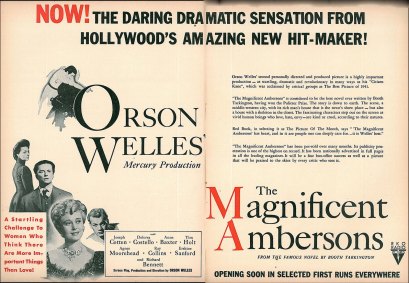
ambersonsnovelBooth Tarkington’s The Magnificent Ambersons is a book I used to read and reread years ago, so much so that when I heard there was a movie with Orson Welles, I assumed immediately that he was perfect casting for George Minafer. I didn’t know at the time that it was a brilliant film by Welles much altered in the editing room, or that Tim Holt played the part. Holt was good, but I still think that the young Welles could and should have played it.

Put rather too simplistically, it’s the story of a declining family, the Ambersons, in a gradually industrializing town that’s passing them by. The protagonist is George Amberson Minafer, as insufferable a character as you’ll ever meet in fiction: proud, pig-headed, wielding class privilege like a whip–sometimes literally. His adoring mother, Isabel, had married George’s father, Wilbur Minafer, out of pique when her suitor, Eugene, showed up drunk one night and serenaded her. Isabel spoils George outrageously, as the town predicts she will.

When Eugene, now a widower, and his daughter, Lucy, return to their “Midland town,” Eugene falls in love with the now-widowed Isabel, and George courts Lucy, who loves him but is exasperated by his behavior. George forbids Isabel (his mother, remember) to see Eugene, and she dies without having had a chance to say goodbye to him.

On one occasion, Lucy tries to explain to Eugene, by using a supposedly Native American legend,  why she’s so attracted to George, even though he’s a character that the reader mostly wants to strangle:

“Vendonah [Rides-Down-Everything] was an unspeakable case,” Lucy continued. “He was so proud that he wore iron shoes and he walked over people’s faces with them. He was always killing people that way, and so at last the tribe decided that it wasn’t a good enough excuse for him that he was young and inexperienced—he’d have to go. They took him down to the river, and put him in a canoe, and pushed him out from shore; and then they ran along the bank and wouldn’t let him land, until at last the current carried the canoe out into the middle, and then on down to the ocean, and he never got back. They didn’t want him back, of course, and if he’d been able to manage it, they’d have put him in another canoe and shoved him out into the river again. But still, they didn’t elect another chief in his place. Other tribes thought that was curious, and wondered about it a lot, but finally they came to the conclusion that the beech grove people were afraid a new chief might turn out to be a bad Indian, too, and wear iron shoes like Vendonah. But they were wrong, because the real reason was that the tribe had led such an exciting life under Vendonah that they couldn’t settle down to anything tamer. He was awful, but he always kept things happening—terrible things, of course. They hated him, but they weren’t able to discover any other warrior that they wanted to make chief in his place. I suppose it was a little like drinking a glass of too strong wine and then trying to take the taste out of your mouth with barley water. They couldn’t help feeling that way.”

George eventually gets his come-uppance, as everyone in the town hopes he will, but virtually no one is there to see, or care, or remember the Ambersons.

ambersonsmovieOne of the things that Tarkington gets a lot right in the psychology of a small town is this idea of the figure that a town–or a media cycle in an election year, come to think of it– love to hate but can’t resist talking or writing about. The town doesn’t love George, or even like him, but as he does for Lucy, he makes life exciting for the town. There’s a sizable shelf of critical books on why protagonists don’t have to be likable (hello, Modernism!), but Tarkington hits on one idea–excitement–that’s often missing from these accounts.

Marginalia in James Lane Allen’s Summer in Arcady: A Tale of Nature

2016-02-23 12.54.59Today I’ve been rereading James Lane Allen’s Summer in Arcady: A Tale of Nature (New York: Macmillan and Co., London: Macmillan & Co., Ltd., 1896) and noticed something that I hadn’t remembered, something not covered in the yellow Post-Its that mark the content–marginalia.
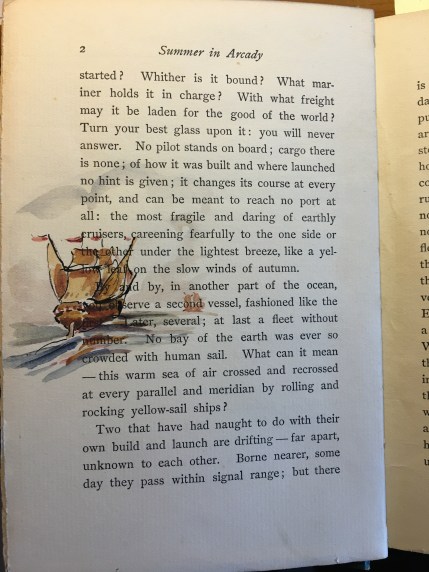
These pictures appear only in the Prelude, not elsewhere in this volume, but as the bookseller noted, “Someone has added skillful watercolor illustrations to pages 1, 2, & 4.”

The illustrations match the text, too; they’re not random doodles.

Here they are:

2016-02-23 12.43.14

2016-02-23 10.07.35

2016-02-23 12.43.50

Amlit updates: Experimental Harriet Beecher Stowe bibliography

I’ll be updating the American lit site over the next few months, including the bibliographies. Since what I generally want to find is what’s new on an author, the Harriet Beecher Stowe bibliography is arranged by the newest material first. http://public.wsu.edu/~campbelld/amlit/stowebib1.htm

It seems to me that since the combination of web and wordprocessing software provides multiple ways of changing and ordering texts, this would be a more efficient solution than putting the little “New” tag in as I have done in the past.

This is an experiment; the older bibliographies will be updated in the conventional way.

Let me know in the comments or by email (campbelld@wsu.edu) if you have any thoughts/preferences.

Teddy Roosevelt Humor from Mr. Dooley (Finley Peter Dunne) in The Bully Pulpit

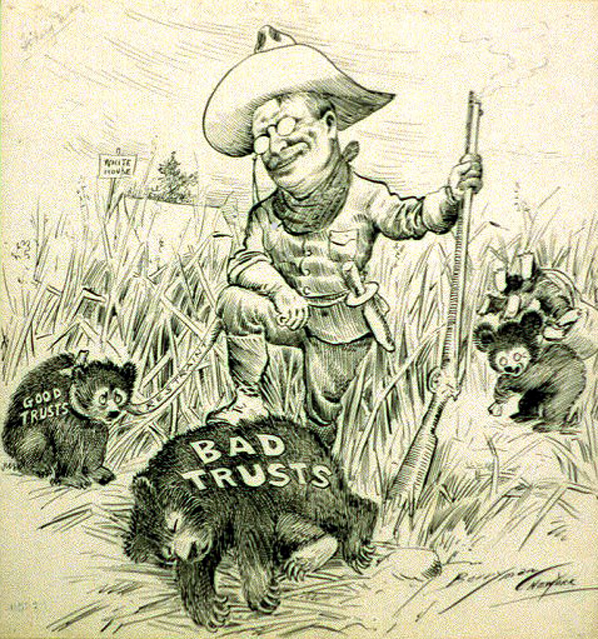
roosevelt_huntI’m rereading (print copy) and relistening to Doris Kearns Goodwin’s The Bully Pulpit: Theodore Roosevelt, William Howard Taft, and the Golden Age of Journalism, the audio version read by the incomparable (and, sadly, late) Edward Herrmann.

This part made me laugh out loud:

Roosevelt’s ability to countenance criticism in the interest of friendship also marked his relationship with the humorist Finley Peter Dunne.  Dunne’s weekly columns in the Chicago Times-Herald, featuring his adopted persona, the irreverent Irish bartender Martin Dooley, placed him among the nation’s most popular and influential literary figures.  Dunne later recalled that his “first acquaintance with Col. Roosevelt grew, strangely enough, out of an article that was by no means friendly to him.”

In the fall of 1899, a copy of The Rough Riders, Roosevelt’s wartime memoir, came across Dunne’s desk. “Mr. Dooley’s” book review in Harper’s Weekly mocked Roosevelt’s propensity for placing himself at the center of all the action: “Tis Th’ Biography iv a Hero be Wan who Knows. Tis Th’Darin’ Exploits iv a Brave Man be an Actual Eye Witness,” Mr. Dooley observes.  “If I was him, I’d call th’ book, ‘Alone in Cubia.”

[Roosevelt apparently loved this joke at his expense.]

“I never knew a man with a keener humor or one who could take a joke on himself with better grace,” Dunne recalled.  For years, Roosevelt told and retold the story of meeting a charming young lady at a reception: “Oh, Governor,” she said, “I’ve read everything you ever wrote.”

“Really! What book did you like best?”

“Why, that one, you know, Alone in Cuba.” 

(pp. 257-58; additional paragraphing added to facilitate web reading).

Bitter Tastes: Which American Women Writers?

 In case you were curious about which “American Women Writers” are in Bitter Tastes, they include the following:

  • Bess Streeter Aldrich
  • Mary Austin
  • Estelle Baker
  • Madeleine Blair
  • Virginia Brooks
  • Willa Cather
  • Kate Chopin
  • Kate Cleary
  • Rebecca Harding Davis
  • Mary Hallock Foote
  • Mary Wilkins Freeman
  • Alice Dunbar-Nelson
  • Sui Sin Far
  • Edna Ferber
  • Zona Gale
  • Ellen Glasgow
  • Emanuel and Anna Marcet Haldeman-Julius
  • Fannie Hurst
  • Edith Summers Kelley
  • Nella Larsen
  • Batterman Lindsay
  • Miriam Michelson
  • Elia Peattie
  • Ann Petry
  • Elizabeth Stuart Phelps
  • Elizabeth Robins
  • Evelyn Scott
  • Gertrude Stein
  • Edith Wharton
  • Lillie Buffum Chace Wyman
  • with side trips to Stephen Crane, Frank Norris, W. D. Howells, Theodore Dreiser, Harold Frederic, and Jack London. (Also, as the title says, silent films.)

Rose Wilder Lane Letter at Slate

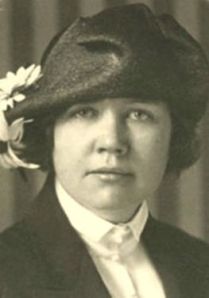
263px-RoseWilderLane01At Slate’s History Vault, Rebecca Onion introduces a letter from Rose Wilder Lane to Laura Ingalls Wilder, her mother and the author of the Little House series of books.

A lot of good books have addressed the question of authorship and co-authorship in the Little House books; see John Miller, Ann Romines, Anita Clair Fellman, and William Holtz’s biography of Lane, The Ghost in the Little House, for just a few of them.

Reading Wilder’s Pioneer Girl” manuscript, the letters between the two women, and the books of both (including Wilder’s essays for farm publications) gives an entirely different perspective than simply reading the Little House series.

The letter at Slate does sound a little peremptory and irritable, but if you read Wilder’s letters in return or those excerpted in Holtz’s biography, you’ll see that in occasional impatience and irritability, Lane didn’t fall far from the maternal tree. In the letter, Lane scolds Wilder for writing that Laura threatened Cousin Charley (remember Charley? The boy who cried wolf, or rather bees?)  with a knife when he tried to kiss her at age twelve: “Maybe you did it, but you can not do it in fiction.” Maybe you couldn’t put it in fiction, but that Laura, like the one who cut school to go roller-skating when she was in high school, would make an interesting and lively character in the real story of her life.

Lane was a major figure in her own right. An award-winning short story writer, a traveler, a working journalist, a novelist: she was the famous writer  long before the Little House books put her forever in the shadows as Baby Rose of The First Four Years.

I’ve written about Wilder‘s Little House books,   about Lane’s pioneer fiction, and about her biography of Jack London, but she’s a fascinating figure who deserves more attention.

New Whitman Digital Resource: Letters from his mother, Louisa Van Velsor Whitman

From DIGAM:

   Wesley Raabe, an assistant professor in the Department of English at Kent State University, has edited the letters of Louisa Van Velsor Whitman, mother of the poet Walt Whitman. Her 170 letters and a new introduction have been published under the title “walter dear”: The Letters from Louisa Van Velsor Whitman to Her Son Walt on the Walt Whitman Archive, and they are now freely available to scholars and to the general public.

   The newly published letters feature digital facsimiles, authoritative transcriptions, dating, and annotation, and integration with Walt’s and other family members’ letters in the Whitman Archive section entitled “Correspondence.” Scholars for the first time will be able to read Walt Whitman’s letters alongside the replies of his mother, who was by far his most frequent correspondent. The edition also includes a new introduction with a biography. The letters and the introduction are online at http://www.whitmanarchive.org/biography/correspondence/index.html


   Walt Whitman described his mother as “illiterate in the formal sense,” but he also proclaimed his masterpiece, Leaves of Grass, to be the “flower of her temperament active in me.” Louisa’s letters illuminate the most important relationship in the poet’s life and offer a rare glimpse into the emotional life of a working-class nineteenth-century American woman. Though she lacked formal education, her letters display verbal power and expressiveness, offering insight into the “family usages” that shaped Walt Whitman’s poetry.  


   The letters from Louisa Whitman to Walt span the period from just before the outbreak of the Civil War through a week before her death in May 1873. Her letters helped bind the Whitman family together during the disruptive years of the Civil War and early Reconstruction. The letters to Walt treat mundane everyday life and moments of great family sorrow, and they make incisive observations on Walt’s growing critical reputation and offer curt dismissals of lesser writers.

Updates to the Edith Wharton Society Site

Yesterday’s updates to the Edith Wharton Society site include a new membership directory at 

http://edithwhartonsociety.wordpress.com/membership/directory/

and the transfer of the minutes from business meetings to the new site at 

http://edithwhartonsociety.wordpress.com/membership/ews-business-2/