Rose Wilder Lane Letter at Slate

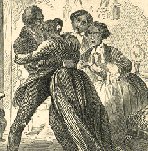
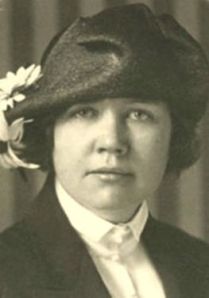
263px-RoseWilderLane01At Slate’s History Vault, Rebecca Onion introduces a letter from Rose Wilder Lane to Laura Ingalls Wilder, her mother and the author of the Little House series of books.

A lot of good books have addressed the question of authorship and co-authorship in the Little House books; see John Miller, Ann Romines, Anita Clair Fellman, and William Holtz’s biography of Lane, The Ghost in the Little House, for just a few of them.

Reading Wilder’s Pioneer Girl” manuscript, the letters between the two women, and the books of both (including Wilder’s essays for farm publications) gives an entirely different perspective than simply reading the Little House series.

The letter at Slate does sound a little peremptory and irritable, but if you read Wilder’s letters in return or those excerpted in Holtz’s biography, you’ll see that in occasional impatience and irritability, Lane didn’t fall far from the maternal tree. In the letter, Lane scolds Wilder for writing that Laura threatened Cousin Charley (remember Charley? The boy who cried wolf, or rather bees?)  with a knife when he tried to kiss her at age twelve: “Maybe you did it, but you can not do it in fiction.” Maybe you couldn’t put it in fiction, but that Laura, like the one who cut school to go roller-skating when she was in high school, would make an interesting and lively character in the real story of her life.

Lane was a major figure in her own right. An award-winning short story writer, a traveler, a working journalist, a novelist: she was the famous writer  long before the Little House books put her forever in the shadows as Baby Rose of The First Four Years.

I’ve written about Wilder‘s Little House books,   about Lane’s pioneer fiction, and about her biography of Jack London, but she’s a fascinating figure who deserves more attention.
Frederick Law Olmstead’s Pacific Northwest Legacy: Spokane, Washington

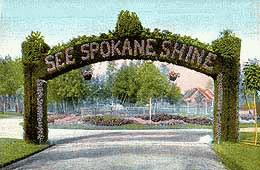
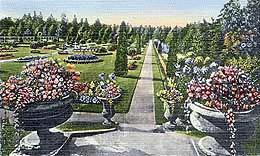
spokane_manito2 spokane_duncanIn honor of Frederick Law Olmstead’s birthday (26 April 1822-28 August 1903), the Digital Public Library posted his plans for Central Park.

But as is well known, parks all across the country owe a debt to Olmstead and his ideas.

From “Olmstead Parks in Spokane” at HistoryLink:

“In 1907, the youthful Spokane was ripe for beautification. Aubrey L. White, the president of the city’s new Park Board, was filled with enthusiasm for the City Beautiful movement, and he also felt a sense of urgency. Because Spokane was growing so fast, he felt that the city had to act immediately if it were to acquire parkland cheaply and avoid the mistakes of the big cities back east.

He knew the Olmsteds were designing projects in Seattle and Portland, so he hired the firm to stop off in Spokane to prepare a report for the city.

Over several visits in 1907 and 1908, White accompanied John Charles Olmsted or his associate, James Frederick Dawson, all over the city — to the river gorge, to Manito Park, to Indian Canyon, to Corbin Park.”

Although these pictures show the more cultivated and less wild parts of one of Spokane’s many parks, the Olmstead influence is still alive and well — as is the Duncan Gardens Rose Garden shown above.

Jack London and a 19th-century shipwreck

This article about the rediscovery of the wreck of the Chester,  which sank in 1888 near the Golden Gate Bridge, calls to mind Jack London’s The Sea Wolf:

Here’s what happened: The City of Chester — a passenger steamer built in 1875, according to the California State Lands Commission’s shipwreck database — departed San Francisco in a dense fog on the morning of Aug. 22, 1888. The ship was heading for Eureka, Calif., a town about 270 miles up the state’s coast, when it collided with the Oceanic, a much larger steamer.

“Collided” may be too gentle a term for this, actually. The Chester “was rammed in mid-channel” by the Oceanic, a ship about twice as long as the Chester, according to Michael D. White’s book “Shipwrecks of the California Coast.”

“The City of Chester was cut almost into halves and reeled under the terrible blow,” The Day (of New London, Conn.) wrote in its evening edition the following day, noting that the Chester sunk in a matter of minutes.

From The Sea Wolf:

The vessels came together before I could follow his advice.  We must have been struck squarely amidships, for I saw nothing, the strange steamboat having passed beyond my line of vision.  The Martinez heeled over, sharply, and there was a crashing and rending of timber.  I was thrown flat on the wet deck, and before I could scramble to my feet I heard the scream of the women.  This it was, I am certain,—the most indescribable of blood-curdling sounds,—that threw me into a panic.  I remembered the life-preservers stored in the cabin, but was met at the door and swept backward by a wild rush of men and women.  What happened in the next few minutes I do not recollect, though I have a clear remembrance of pulling down life-preservers from the overhead racks, while the red-faced man fastened them about the bodies of an hysterical group of women.  This memory is as distinct and sharp as that of any picture I have seen.  It is a picture, and I can see it now,—the jagged edges of the hole in the side of the cabin, through which the grey fog swirled and eddied; the empty upholstered seats, littered with all the evidences of sudden flight, such as packages, hand satchels, umbrellas, and wraps; the stout gentleman who had been reading my essay, encased in cork and canvas, the magazine still in his hand, and asking me with monotonous insistence if I thought there was any danger; the red-faced man, stumping gallantly around on his artificial legs and buckling life-preservers on all comers; and finally, the screaming bedlam of women.

. . .

I descended to the lower deck.  The Martinez was sinking fast, for the water was very near.  Numbers of the passengers were leaping overboard.  Others, in the water, were clamouring to be taken aboard again.  No one heeded them.  A cry arose that we were sinking.  I was seized by the consequent panic, and went over the side in a surge of bodies.  How I went over I do not know, though I did know, and instantly, why those in the water were so desirous of getting back on the steamer.  The water was cold—so cold that it was painful.  The pang, as I plunged into it, was as quick and sharp as that of fire.  It bit to the marrow.  It was like the grip of death.  I gasped with the anguish and shock of it, filling my lungs before the life-preserver popped me to the surface.  The taste of the salt was strong in my mouth, and I was strangling with the acrid stuff in my throat and lungs.

Variety review of 1918 film of The House of Mirth: “A distinctly rotten mess, well produced”

katherineharrisbarrymore

Katherine Harris Barrymore, the Lily Bart of this film, from http://aestheteslament.blogspot.com/2012/01/well-said-lily-bart.html

As part of my current book project, Bitter Tastes: Naturalism, Early Film, and American Women’s Writing, I’ve been working with a lot of silent film resources, including reviews, in addition to writing more about Wharton.

Here’s a gem from Variety, August 23, 1918: a review of a  now-lost film adaptation of Edith Wharton’s The House of Mirth.  Excerpts:

It has been scenarioized by June Mathis for Metro, directed by Albert Capellani, photographed by Eugene Gaudio, all of it with rare excellence for the respective efforts, but the layout  is not a good one for a feature picture for the reason that the majority of the principals are a rotten set, not worth wasting time over, especially as none of them get their just desserts.  . . . And so on, etc., until you are led to believe that no one is on the level and it develops that everybody has the goods on everybody else.

At the middle of the fifth reel the aunt having died and left the girl penniless, she seeks work, doesn’t find it, she tries suicide and is rescued in time for a clinch with the lawyer.  The remainder of the cast are left to continue their incessant prowling for affairs with those of the opposite sex. 

A distinctly rotten mess, well produced. 

This was clearly an A-list production. June Mathis was a talented scenarist, famous for discovering Rudolph Valentino, and the French director Albert Capellani directed such notable films as Camille and The Red Lantern

Since Selden (“the lawyer”) arrives in time for a clinch rather than too late, the production delivered what W. D. Howells told her the American public always wanted to see: “a tragedy with a happy ending.” Also of interest to Wharton fans: the cast list includes “Bertha Trenor-Dorset” and “Augustus Trenor-Dorset,” a neat conflation of the Bertha and George Dorset and Judy and Gus Trenor of the novel.

“Rotten mess” though it might have been, it’s too bad that this is a lost film. Wharton would have been pleased, though, that Jolo, the reviewer for Variety, understood the “despicable” nature of the society she described.

Happy 152nd Birthday to Edith Wharton

ImageOn January 24, 1862, a daughter was born to Mr. and Mrs. George Frederic Jones of New York City.  Christened Edith Newbold Jones, she would grow up to be a great novelist and short story writer, not to mention poet, dramatist, social satirist, essayist, letter writer, gardener, interior designer, tireless director of French charities and reporter of conditions at the front during WWI, loyal friend, and a great if formidably intimidating hostess.

You can read more about her in the many books and articles that have been written about her since her death (head over to the Edith Wharton Society for some lists), but I just wanted to give her a shout-out here. (And to recognize that the term “shout-out” would have dismayed and amused her, and that she’d have given it to a vulgar character like Elmer Moffatt of The Custom of the Country or Lita of Twilight Sleep to show just how trashy they were.)

The short version of this post?  Go read Edith Wharton.  You won’t be disappointed.

Constance Fenimore Woolson (March 5, 1840-January 24, 1894)

One hundred and twenty years ago this week, on January 24, 1894, an ailing Constance Fenimore Woolson fell to her death from a window in Casa Semeticolo, Venice. Lyndall Gordon’s A Private Life of Henry James contends that this was suicide, but I’m waiting for the publication of  Anne Boyd Rioux‘s new biography of Woolson to settle the matter.

In reading Gordon’s book at breakfast this morning, what struck me was not the manner of her death but Henry James’s reaction to it.  Distraught, he canceled his trip to attend the funeral (arranged by John Hay), yet some months later he moved to Venice, and, abandoning his usual rooms, rented hers for a few months.  Gordon reports that James felt comforted by Woolson’s strong presence there but also suggests that he had both wanted to avoid the publicity of his connection with her (hence not attending the funeral) and to court publicity through his extensive network, something that led to a “his heart is in the grave” piece in a newspaper about him.

MLA Rankings of American Authors

At Commentary, a list of American writers ranked by numbers of publications devoted to them, with rankings from 1947 and apparently 1987. The author notes that “The reputations of Hawthorne, Emerson, Thoreau, Twain, Fitzgerald, and Frost have slipped badly. Poor William Dean Howells has fallen out of the top 25 altogether (to be replaced by Richard Wright).”

( 1.) Henry James (3,188 items) [+1]
( 2.) William Faulkner (2,955) [-1]
( 3.) T. S. Eliot (2,659) [+1]
( 4.) Herman Melville (2,579) [-1]
( 5.) Vladimir Nabokov (2,290) [+5]
( 6.) Ernest Hemingway (2,220) [-0-]
( 7.) Edgar Allan Poe (1,958) [-2]
( 8.) Toni Morrison (1,950) [+9]
( 9.) Nathaniel Hawthorne (1,751) [-4]
(10.) Walt Whitman (1,647) [-2]
(11.) Emily Dickinson (1,623) [+2]
(12.) Ezra Pound (1,620) [-3]
(13.) Willa Cather (1,482) [+5]
(14.) Ralph Waldo Emerson (1,326) [-3]
(15.) Wallace Stevens (1,122) [-1]
(16.) Edith Wharton (1,087) [+5]
(17.) Henry David Thoreau (1,076) [-5]
(18.) F. Scott Fitzgerald (1,002) [-3]
(19.) Flannery O’Connor (935) [+3]
(20.) Mark Twain (882) [-4]
(21.) John Steinbeck (823) [+2]
(22.) William Carlos Williams (772) [-0-]
(23.) Saul Bellow (706) [+2]
(24.) Richard Wright (670) [+2]
(25.) Robert Frost (661) [-5]

It’s an interesting relative measure, although it’s a little like ranking movies by opening weekend grosses or like those perpetual “Top 100” books/movies/songs lists that proliferate around the end of the year.

I’m a little unsure about the methodology: this morning’s MLA count of Edith Wharton references totaled 1557, only 10 of which were before 1947, so maybe dissertations and other pieces weren’t counted. But only five women writers and two writers of color made the list, which is a little surprising.  I wonder what a decade-by-decade count of these 25 authors would look like.

A hardwired fear of snakes reported–in 1896. Harold Frederic’s The Damnation of Theron Ware

The Los Angeles Times and other news outlets report that the brains of Japanese macaques (and possibly human beings) may be hard-wired to fear snakes

The results, published online Monday in the journalProceedings of the National Academy of Sciences, appear to support a theory that early primates developed advanced perception as an evolutionary response to being prey, not as an adaptation that may have made foraging or hunting easier.

Though fear of snakes may not be innate, noticing them more than other phenomena may be hard-wired by evolution, said Lynne Isbell, an evolutionary biologist fromUC Davis and one of the authors of the paper. That heightened attention, research has shown, can lead to early and resilient learned behavior, such as fear-mediated avoidance. In other words, getting out of the way of snakes. [. . . ]

The researchers used two monkeys raised in captivity that had no opportunity to encounter a snake. Probes measured responses to snakes, faces and hands of monkeys, and geometric shapes. More neurons responded to the snakes, and did so with greater strength and speed, the data showed.

This passage from Harold Frederic’s 1896 novel The Damnation of Theron Ware anticipates these results.  In the following passage, Dr. Ledsmar, an evolutionary scientist, is leading the naive minister Theron Ware around various scientific exhibits in his house.

They moved out of the room, and through a passage, Ledsmar talking as he led the way. “I took up that subject, when I was at college, by a curious chance. I kept a young monkey in my rooms, which had been born in captivity. I brought home from a beer hall—it was in Germany—some pretzels one night, and tossed one toward the monkey. He jumped toward it, then screamed and ran back shuddering with fright. I couldn’t understand it at first. Then I saw that the curled pretzel, lying there on the floor, was very like a little coiled-up snake. The monkey had never seen a snake, but it was in his blood to be afraid of one. That incident changed my whole life for me. Up to that evening, I had intended to be a lawyer.”

Annette Gordon-Reed on Solomon Northup’s 12 Years a Slave

ImageIn The New Yorker this week, Annette Gordon-Reed discusses Northup’s 12 Years a Slave (available here) and the issues of the genre of slave narratives:

As powerful as they are, slave narratives are often said to raise special concerns as items of historical evidence. One argument goes as follows: White abolitionists, who almost always had a hand in helping to prepare and disseminate the narratives, hoped to destroy slavery by highlighting the more shocking aspects of the institution—the whippings, the separations of families, and the sexual abuse of enslaved women. As a result, the argument continues, the narratives adhere to a literary convention in which all of these events must play a prominent role, raising questions about the veracity of the stories. This seems a rather odd complaint, given that we know from other sources that whippings, separation of families, and sexual abuse were endemic to the institution. It would be more incredible, quite frankly, if Solomon Northup had spent twelve years on a slave plantation in Louisiana without encountering all of these things.

Another concern centers on the nature of the relationship between white sponsors and black narrators. Given the racial power dynamics, could blacks speak freely to the abolitionists and, later, to the white interlocutors who gathered stories for the Work Project Administration (W.P.A.), during the nineteen-thirties? If points of conflict arose, whose view would prevail? It has also been noted that the W.P.A. interviewees were children during slavery. A number of them painted almost benign pictures of the institution of slavery. Was this done to please their white interviewers, who were, after all, agents of the government, or were they just remembering a world through the eyes of children, without the heavy burdens that their parents had known?

There are other issues with slave narratives, but the simple fact is that every form of historical evidence has its own set of problems.

Gordon-Reed’s magisterial book on Thomas Jefferson and Sally Hemings, which she references in the concluding paragraphs, sorts out these issues in great detail, distinguishing between what we can and cannot know about the relationship between the two and what the documentary evidence can and cannot reveal.

Earle Labor’s new Jack London biography

Cross-posted from the Jack London Society site at http://jacklondonsociety.org

Edited to add: This clip also has a 10-second excerpt (at 2:00)  from the only known recording of Jack London’s voice, which isn’t otherwise available online.

I’ve been hearing portions of this biography for years at Jack London symposia, and it should be a terrific book.  Labor began working on Jack London in the 1960s; a prominent scholar, he knows as much about London’s life as it’s possible to know after a lifetime of study.

From http://www.npr.org/2013/10/17/230497660/jack-london-believed-function-of-man-is-to-live-not-to-exist

A literary critic once remarked, “The greatest story Jack London ever wrote was the story he lived.” In his brief life, London sought adventure in the far corners of the world, from the frozen Yukon to the South Pacific, writing gripping tales of survival based on his experiences — including The Call of the WildWhite Fang and The Sea Wolf.

His story is the subject of a new biography,Jack London: An American Life, by Earle Labor, curator of the Jack London Museum in Shreveport, La. Labor wrote his first book about London in 1974, but the 85-year-old scholar says with London, there’s always more to write.

Image[read or listen to the rest at the link]