Stephen Crane in the News: THE RED AND THE SCARLET: The hectic career of Stephen Crane. BY CALEB CRAIN

Caleb Crain’s sketch of Stephen Crane’s life at The New Yorker.

Donna Campbell's avatarThe Stephen Crane Society

From The New Yorker:
THE RED AND THE SCARLET
The hectic career of Stephen Crane.
BY CALEB CRAIN
JUNE 30, 2014

Early readers of “The Red Badge of Courage” assumed that its author was a war veteran.

Early readers of “The Red Badge of Courage” assumed that its author was a war veteran.

In Stephen Crane’s novel “Maggie” (1893), it’s impossible to pinpoint the moment when the title character is first set on the path to prostitution. Maybe it happens when her brother’s friend Pete tells her that her figure is “outa sight.” Maybe it happens a little later, when her job making shirt collars on an assembly line begins to seem dreary. Is it a mistake when she lets Pete take her to a music hall? What about when she lets him spirit her away from her rage-filled mother, who has collapsed on the kitchen floor after a bender? Women in the neighborhood gossip, and a practiced flirt steals Pete away—perhaps they are instrumental. Or…

View original post 32 more words

Civil War hero Robert Smalls

Robert Smalls (crop)From the Washington Post, a story about Civil War hero Robert Smalls: http://www.washingtonpost.com/local/civil-war-hero-robert-smalls-seized-the-opportunity-to-be-free/2012/02/23/gIQAcGBtmR_story.html?tid=pm_pop

Smalls became skilled at working on ships, eventually advancing to the position of pilot. In 1861, he was hired to work on a steamer called the Planter, which was used to transport cotton to ships headed to Europe. But once the Civil War started, the Confederates seized it for use as an armed transport vessel.

Smalls knew how to navigate. He knew that the white crew trusted him. He had his eye on freedom, and all he needed was an opportunity.

* * *

“They were going to seize the ship,” said Lawrence Guyot, a black-history expert in Washington. “It was dangerous. It was daring. It was unprecedented. And when they accomplished it, it was used to demonstrate that blacks could be brave and strategic in pulling off military maneuvers. Because of what happened on the Planter, Abraham Lincoln decided to let African Americans join the fight in the Civil War.”

Good news for researchers: New York Public Library to retain some collections on site

From Caleb Crain at The New Yorker (http://www.newyorker.com/online/blogs/books/2014/05/the-new-york-public-library-comes-around.html): 

Last week, the Times reported that the New York Public Library, in a surprising about-face, has given up on its plan to tear seven stories of bookshelves out of its white-marble flagship building, on Forty-second Street and Fifth Avenue. The bookshelves, usually referred to as “the stacks,” literally hold up the palatial reading room on the library’s third floor, and, in 2008, when the plan to remove them was first announced, they contained the heart of the library’s research collection. . . . 


Almost every major research library has to store part of its collection remotely, but in this, as in all things, there must be proportion. It takes time to get a book from New Jersey into Manhattan, and if a researcher has to wait a day or two to see a new text some of the serendipity goes out of research. If a researcher’s deadline is tomorrow, a book that he can’t see until the day after is of no use to him. 

I would add that, for out-of-town researchers planning a trip to an archive, this access is critical as well.  The best-laid plans and online searches of collections can’t prepare you for something that you discover on site, and, as Crain says, some of the serendipity goes out of research if you can’t access the texts before a 24- or 48-hour (or longer) wait.  

Encyclopedia of American Studies Goes Open Access

This notice sent to ASA members announces a welcome new open access resource: 

Encyclopedia of American Studies Goes Open Access

by Monique Laney

In an effort to provide researchers with an alternative source of information, the Encyclopedia of American Studies (EAS) has adopted an open access policy. Scholars and others studying American culture and society can now search the extensive database athttp://eas-ref.press.jhu.edu free of charge. “The field of American Studies has changed a great deal since the print version of the encyclopedia was first released in 2001,” said EAS editor Simon Bronner. “We heard from scholars and institutions globally about access and realized we had the opportunity with a new format to keep up with the latest developments.”

The EAS is sponsored by the American Studies Association and hosted by the Johns Hopkins University Press, publisher of the ASA’s official journal American Quarterly. The online version first appeared in 2003. The encyclopedia home page received a new look to coincide with the switch to open access. Bronner explained some of these changes in a recent podcasthttp://www.press.jhu.edu/journals/podcasts.html. The Encyclopedia has more than 800 online, searchable articles and accompanying bibliographies, related websites, illustrations, and supplemental material covering the history, philosophy, arts, and cultures of the United States in relation to the world, from pre-colonial days to the present.

“We wanted to show the institutional value of American studies as an interdisciplinary perspective which may not exist in other online resources,” said Bronner, chair of the American Studies Program and distinguished professor of American studies and folklore at Pennsylvania State University, Harrisburg. “The Encyclopedia includes interpretive angles that show trends and ideas of research that may provoke a different line of thinking.” Bronner said that the editorial board of the Encyclopedia, which includes scholars from the U.S., Hong Kong and Switzerland, will work to continually update the site. He also said plans exist to expand the amount of multimedia content available to users of the Encyclopedia.

Rose Wilder Lane Letter at Slate

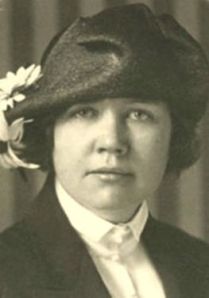
263px-RoseWilderLane01At Slate’s History Vault, Rebecca Onion introduces a letter from Rose Wilder Lane to Laura Ingalls Wilder, her mother and the author of the Little House series of books.

A lot of good books have addressed the question of authorship and co-authorship in the Little House books; see John Miller, Ann Romines, Anita Clair Fellman, and William Holtz’s biography of Lane, The Ghost in the Little House, for just a few of them.

Reading Wilder’s Pioneer Girl” manuscript, the letters between the two women, and the books of both (including Wilder’s essays for farm publications) gives an entirely different perspective than simply reading the Little House series.

The letter at Slate does sound a little peremptory and irritable, but if you read Wilder’s letters in return or those excerpted in Holtz’s biography, you’ll see that in occasional impatience and irritability, Lane didn’t fall far from the maternal tree. In the letter, Lane scolds Wilder for writing that Laura threatened Cousin Charley (remember Charley? The boy who cried wolf, or rather bees?)  with a knife when he tried to kiss her at age twelve: “Maybe you did it, but you can not do it in fiction.” Maybe you couldn’t put it in fiction, but that Laura, like the one who cut school to go roller-skating when she was in high school, would make an interesting and lively character in the real story of her life.

Lane was a major figure in her own right. An award-winning short story writer, a traveler, a working journalist, a novelist: she was the famous writer  long before the Little House books put her forever in the shadows as Baby Rose of The First Four Years.

I’ve written about Wilder‘s Little House books,   about Lane’s pioneer fiction, and about her biography of Jack London, but she’s a fascinating figure who deserves more attention.

Frederick Law Olmstead’s Pacific Northwest Legacy: Spokane, Washington

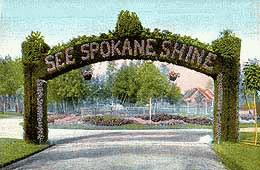
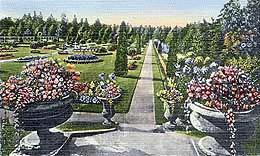
spokane_manito2 spokane_duncanIn honor of Frederick Law Olmstead’s birthday (26 April 1822-28 August 1903), the Digital Public Library posted his plans for Central Park.

But as is well known, parks all across the country owe a debt to Olmstead and his ideas.

From “Olmstead Parks in Spokane” at HistoryLink:

“In 1907, the youthful Spokane was ripe for beautification. Aubrey L. White, the president of the city’s new Park Board, was filled with enthusiasm for the City Beautiful movement, and he also felt a sense of urgency. Because Spokane was growing so fast, he felt that the city had to act immediately if it were to acquire parkland cheaply and avoid the mistakes of the big cities back east.

He knew the Olmsteds were designing projects in Seattle and Portland, so he hired the firm to stop off in Spokane to prepare a report for the city.

Over several visits in 1907 and 1908, White accompanied John Charles Olmsted or his associate, James Frederick Dawson, all over the city — to the river gorge, to Manito Park, to Indian Canyon, to Corbin Park.”

Although these pictures show the more cultivated and less wild parts of one of Spokane’s many parks, the Olmstead influence is still alive and well — as is the Duncan Gardens Rose Garden shown above.

Jack London and a 19th-century shipwreck

This article about the rediscovery of the wreck of the Chester,  which sank in 1888 near the Golden Gate Bridge, calls to mind Jack London’s The Sea Wolf:

Here’s what happened: The City of Chester — a passenger steamer built in 1875, according to the California State Lands Commission’s shipwreck database — departed San Francisco in a dense fog on the morning of Aug. 22, 1888. The ship was heading for Eureka, Calif., a town about 270 miles up the state’s coast, when it collided with the Oceanic, a much larger steamer.

“Collided” may be too gentle a term for this, actually. The Chester “was rammed in mid-channel” by the Oceanic, a ship about twice as long as the Chester, according to Michael D. White’s book “Shipwrecks of the California Coast.”

“The City of Chester was cut almost into halves and reeled under the terrible blow,” The Day (of New London, Conn.) wrote in its evening edition the following day, noting that the Chester sunk in a matter of minutes.

From The Sea Wolf:

The vessels came together before I could follow his advice.  We must have been struck squarely amidships, for I saw nothing, the strange steamboat having passed beyond my line of vision.  The Martinez heeled over, sharply, and there was a crashing and rending of timber.  I was thrown flat on the wet deck, and before I could scramble to my feet I heard the scream of the women.  This it was, I am certain,—the most indescribable of blood-curdling sounds,—that threw me into a panic.  I remembered the life-preservers stored in the cabin, but was met at the door and swept backward by a wild rush of men and women.  What happened in the next few minutes I do not recollect, though I have a clear remembrance of pulling down life-preservers from the overhead racks, while the red-faced man fastened them about the bodies of an hysterical group of women.  This memory is as distinct and sharp as that of any picture I have seen.  It is a picture, and I can see it now,—the jagged edges of the hole in the side of the cabin, through which the grey fog swirled and eddied; the empty upholstered seats, littered with all the evidences of sudden flight, such as packages, hand satchels, umbrellas, and wraps; the stout gentleman who had been reading my essay, encased in cork and canvas, the magazine still in his hand, and asking me with monotonous insistence if I thought there was any danger; the red-faced man, stumping gallantly around on his artificial legs and buckling life-preservers on all comers; and finally, the screaming bedlam of women.

. . .

I descended to the lower deck.  The Martinez was sinking fast, for the water was very near.  Numbers of the passengers were leaping overboard.  Others, in the water, were clamouring to be taken aboard again.  No one heeded them.  A cry arose that we were sinking.  I was seized by the consequent panic, and went over the side in a surge of bodies.  How I went over I do not know, though I did know, and instantly, why those in the water were so desirous of getting back on the steamer.  The water was cold—so cold that it was painful.  The pang, as I plunged into it, was as quick and sharp as that of fire.  It bit to the marrow.  It was like the grip of death.  I gasped with the anguish and shock of it, filling my lungs before the life-preserver popped me to the surface.  The taste of the salt was strong in my mouth, and I was strangling with the acrid stuff in my throat and lungs.