What does the painting “Surrender of Lord Cornwallis” have to do with Edith Wharton?

cornwallissurrender

Surrender of Lord Cornwallis by John Trumbull (1820)

What does the surrender of Lord Cornwallis after the Battle of Yorktown on October 19, 1781, have to do with Edith Wharton?

This sounds like Lewis Carroll’s Mad Hatter’s famous riddle “How is a raven like a writing desk?” but there actually is a connection.

John Trumbull’s painting Surrender of Lord Cornwallis, which is in the rotunda of the U.S. Capitol, depicts, obviously, the surrender. Cornwallis wasn’t there but sent his second-in-command, so General Lincoln (on white horse), Washington’s second-in-command, accepted the sword of surrender. (Based on this chart, I’ve labeled Hamilton, Laurens, Knox, and Lafayette.)

But at the rear of the painting, between Lincoln and Washington, is  Ebenezer Stevens, Colonel of American Infantry, who later rose to the rank of General. The picture and the man are noteworthy for obvious reasons, but they also feature prominently in Edith Wharton’s A Backward Glance–for Stevens was Wharton’s great-grandfather and the man who built the original dwelling called “the Mount,” after which Wharton named her house near Lenox, Massachusetts.

Here’s an excerpt from pp. 11-14 of A Backward Glance, with some added bolding (mine, not Wharton’s) for emphasis:

My great-grandfather, the Major-General Ebenezer Stevens of the Rotunda,
seems to have been the only marked figure among my forebears. He was
born in Boston in 1751 and, having a pronounced tendency to mechanical
pursuits, was naturally drafted into the artillery at the Revolution. He
served in Lieutenant Adino Paddock’s artillery company, and took part in
the “Boston tea-party,” where, as he told one of his sons, “none of the
party was painted as Indians, nor, that I know of, disguised; though,”
(he adds a trifle casuistically) “some of them stopped at a paint-shop
on the way and daubed their faces with paint.” . . .  At Ticonderoga,
Stillwater and Saratoga he commanded a division of artillery, and it was
he who directed the operations leading to General Burgoyne’s surrender.
For these feats he was specially commended by Generals Knox, Gates and
Schuyler, and in 1778 he was in command of the entire artillery service
of the northern department. Under Lafayette he took part in the
expedition which ended in the defeat of Lord Cornwallis; his skilful
manoeuvres are said to have broken the English blockade at Annapolis,
and when the English evacuated New York he was among the first to enter
the city.

bggeneralstevens

From A Backward Glance, p. 15.

The war over, he declined further military advancement and returned to civil life. His services, however, were still frequently required, and in 1812 he was put in command of the New York Brigade of artillery. One
of the forts built at this time for the defence of New York harbour was called Fort Stevens, in his honour, and after the laying of the
foundation stone he “gave the party a dinner at his country seat, ‘Mount Buonaparte’,” which he named after the hero who restored order in
France.

My great-grandfather next became an East-India merchant, and carried on a large and successful trade with foreign ports. The United States War Department still entrusted him with important private missions; he was a
confidential agent of both the French and English governments, and at
the same time took a leading part in the municipal business of New York,
and served on numerous commissions dealing with public affairs. He
divided his year between his New York house in Warren Street, and Mount
Buonaparte, the country place on Long Island created by the fortune he
had made as a merchant; but when his hero dropped the u from his name
and became Emperor, my scandalized great-grandfather, irrevocably
committed to the Republican idea, indignantly re-named his place “The
Mount.” . . . In his Bonapartist days General Stevens must have imported a good deal of Empire furniture from Paris, and one relic, a pair of fine gilt andirons crowned with
Napoleonic eagles, has descended to his distant great-grand-daughter;
but much was doubtless discarded when the mantelpieces went, and the
stuffy day of Regency upholstery set in.

If I have dwelt too long on the career of this model citizen it is
because of a secret partiality for him–for his stern high-nosed good
looks, his gallantry in war, his love of luxury, his tireless commercial
activities. I like above all the abounding energy, the swift
adaptability and the joie de vivre which hurried him from one adventure
to another, with war, commerce and domesticity (he had two wives and
fourteen children) all carried on to the same heroic tune. But perhaps I
feel nearest to him when I look at my eagle andirons, and think of the
exquisite polychrome mantels that he found the time to bring all the way
from Italy, to keep company with the orange-trees on his terrace.

Jack London: Apostle of the American West Presentation at CSPAN-3 (link)

screen-shot-2016-10-15-at-3-29-34-pm
Here’s a link to the September 19 presentation “Jack London: Apostle of the American West” at the Bill Lane Center for the American West at Stanford University. The presentation was recorded and  was broadcast today on CSPAN-3: https://www.c-span.org/video/?415342-1/life-legacy-jack-london.

Thanks again to Marc Levin (at podium), Fellow and Affiliated Scholar at the Bill Lane Center for the American West; Preeti Hehmeyer, Associate Director for Programming and Development; Bruce E. Cain, Spence and Cleone Eccles Family Director of the Bill Lane Center for the American West (at right); and my fellow panelists Sara S. Hodson, Curator of Literary Manuscripts at the Huntington Library (second from right); Peter Blodgett, H. Russell Smith Foundation Curator of Western American Manuscripts at the Huntington Library; and Jeanne Campbell Reesman, Professor of English at the University of Texas at San Antonio (center).


Murder on her Mind: Did Edith Wharton write about Lizzie Borden? (part 3 of 3)

allthisandheaventoo1940_574_678x380_11082013091638

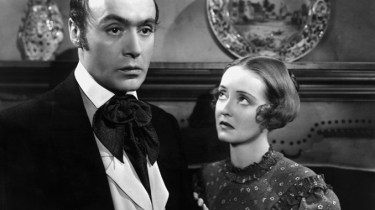
Charles Boyer and Bette Davis in All This and Heaven, Too (1940). Picture from TCM.

If Edith Wharton  was so enthusiastic about writing the Lizzie Borden story, why didn’t she finish the play Kate Spain? 

The key to this is what she told her sister-in-law and friend, Minnie Jones, in the letter dated March 9, 1935. At this point, she had written (but not published) “Confession,” and she had also written the first act of what she calls “the Lizzie Borden play.”

But Wharton also worried that “it was more than likely that it had already been used.” Her friend Edward Sheldon, the playwright, told her that it had been done, she claimed, and so she decided not to finish the play.

The story “Confession” was another matter;  as she told Minnie Jones, “I do not think the story will suffer much from its Borden origin, as you will have seen by this time that it is of no importance in my fable, and my young woman could quite as well have murdered an intolerable husband” (Letters 584). In “Confession,” the narrator wonders whether Kate could be “the murderess of her own father”  (Lewis, Collected Stories 2: 817), but the other details differ from the case.

screen-shot-2016-10-13-at-8-10-35-am

Lizzie Borden listens to testimony about the burning of the dress. From trial accounts of the time in The Lizzie Borden Sourcebook (at the link).

This helps to explain one mystery: why is Kate Spain so much more explicit about the murder than “Confession”? If Wharton intended the story to be a more general “fable” rather than a treatment exclusively of the Borden story, the ambiguity makes sense.

Kate Spain has many specific details, including a piece of stained calico burned around the edges and a deleted segment stating that the father had been killed while lying on the sofa. These references show Wharton’s familiarity with the case. If you’ve read any of the books about the case, for example, you’ll recall that Borden is supposed to have burned a calico dress in the stove. “I am going to burn this old thing up; it is covered with paint,”  she said, which apparently didn’t influence the jury’s decision.

allthis

Sheldon didn’t stop at telling Wharton that the Borden case had been overdone, however; he suggested instead that she use “the Praslin murder instead.”  The “Praslin murder” was a famous murder case involving the Duc de Choiseul-Praslin, whose wife, Fanny Sebastiani (by whom he had 10 children), was apparently passionately jealous of him and had recently fired the family’s governess, Henriette Deluzy-Desportes, due to her suspicions.  On 18 August 1847, the Duchesse was found bludgeoned and stabbed to death; the Duc maintained his innocence but, while awaiting trial, committed suicide.  The governess, Henriette Deluzy-Desportes, was briefly jailed in the murder but released. She became the wife of the minister Henry Martyn Field, brother of Cyrus Field (whose company laid the first Atlantic cable), and the couple later lived in Stockbridge, Massachusetts.

In her letter to Minnie Jones, Wharton adds, tantalizingly, that she “began a novel on the Praslin case two or three years ago, which alas I did not finish; and last year I saw that some one else had used the subject, though probably quite differently, as I had intended the story to begin only after the governess arrives in Stockbridge” (Letters 584). In addition to being the setting for the real story, Stockbridge was a natural choice for Wharton: she had lived near there in Lenox at The Mount for ten years, and she had set Ethan Frome and Summer in the same region.

The editors of the letters, R.W.B. Lewis and Nancy Lewis, don’t give a title for this unfinished Praslin novel by Wharton. They do, however,  supply a name of the presumed other novel on the subject, implying that they thought this was the treatment to which she referred: Rachel Field’s All This and Heaven, Too, which was made into a movie starring Bette Davis and Charles Boyer in 1940. Rachel Field was the great-niece of Henriette Deluzy-Desportes, the governess at the center of the case. I’ve read the novel  (the source of the brief summary of the murder case above), and it is sympathetic–very–to her great-aunt’s position.

Here’s another mystery, though: All This and Heaven, Too was published in 1938, the year after Wharton’s death. Was this the version that Wharton referred to, and if so, how had she seen it by 1934, the “last year” when she mentioned seeing something else about the subject? If it was in French, she might have read it but wouldn’t have been deterred from writing about it, because she was looking at the American market for her works.

I’ll have to look more closely to see if there’s a serial version (haven’t found one yet), but another possibility is that someone at Macmillan, which was Wharton’s publisher and also Field’s, tipped her off about it.

That’s all for now, but the search continues for a lead on the Praslin novel that Wharton saw.

Part 1

Part 2

Part 3

Murder on her Mind: Did Edith Wharton write about Lizzie Borden? (part 2 of 3)

wharton1930s

An older Edith Wharton, writing–could it be about Lizzie Borden?

Wharton obviously felt a connection to writing about the Lizzie Borden case.

At the time she wrote to Minnie Jones about her story “Confession” in March 1935, it had not yet been published. As mentioned in the previous post, it appeared in Storyteller 58 (March 1936): 64-85 under the title “Unconfessed Crime.”

But  Wharton was already “contemplating a play on the same subject, but I felt that it was more than likely that it had already been used” (Letters 584). In fact, she “became so absorbed in writing the first act of the Lizzie Borden play that I am not sorry to have done it.”

Wharton called the play “Kate Spain,” and it was never completed or published during her lifetime. It exists in the archives of the Beinecke Library’s YCAL MSS 42 Edith Wharton Collection, Box 20.

For those who can’t travel to New Haven, it fortunately also appears in a more accessible spot, Laura Rattray’s valuable collection Unpublished Writings of Edith Wharton, Vol. 1: Plays (London: Pickering and Chatto, 2009), pp. 137-158.

You can find a copy in a library near you in WorldCat by putting in your zip code at the link.

The play version takes place partly in “Cayuga (or some big town in the north part of the state of N.Y.)”–upstate, in other words. Wharton had no use for upstate New York; in “The Other Two,” Alice Varick Waythorn is “unearthed” from “somewhere  . . .  Pittsburg or Utica” (Lewis, Collected Stories 1: 381)Wharton, or her character Waythorn, obviously had only the haziest conception of upstate New York, a common affliction, and if she meant “Pittsburgh,” even less of a conception of  western Pennsylvania.

It’s as though she waved a graceful hand in a mildly northwestern direction from Manhattan and figured “close enough.” The only place she ridicules more thoroughly is  the Midwest. Undine Spragg’s hometown of  “Apex City” in The Custom of the Country doesn’t even exist in a particular state. But as a substitute for Fall River, Massachusetts, the site of the Borden murders, “Cayuga” is perfect: large enough (“big town”) for gossip, wealth, and an entrenched social structure, but alien enough to Wharton’s readers that they wouldn’t be looking for the nuanced social analysis she brought to “Old New York.”

330px-lizzie_borden

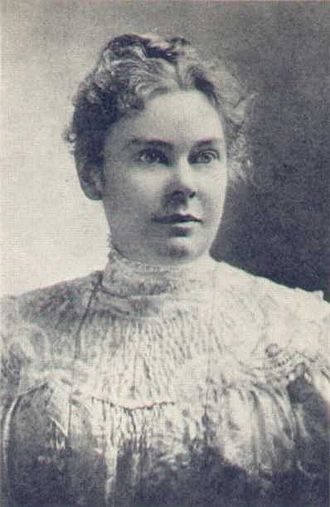
Lizzie Borden. See Wharton’s description of “Kate Spain” at left. 

Both versions feature a Lizzie Borden-type character and a menacing female companion; both have a mystery at the center. One features overt blackmail. Again, no spoilers, but in the story “Confession,” you never learn what happened. In the play version, you learn whether Lizzie Borden “took an axe” or not.

Here’s a description of the two women, from Rattray’s edition:

“Kate Spain is about thirty-two,” [note: Lizzie’s age at the time of the murders] “rather tall, very thin, with black hair and wide very pale gray eyes. Her mouth is beautiful, but the lips are white, and drawn into lines of misery. When she takes her hat off a grayish lock shows above her temples.”

“Cassie is stout, with a red mottled complexion, thin brown hair, rather prominent bold eyes, and a thick white throat with a crease in it. She carries a basket of provisions on one arm, a cheap vanity-bag on the other<,> and stands looking about her from the threshold.”

The character “Cassie” (though not necessarily her appearance or actions) is based on the Bordens’ housekeeper, Bridget Sullivan, whom the Bordens apparently called “Maggie.” She lived until 1948 (picture at the link). Her trial testimony is here. 

Why didn’t Wharton finish the play?

[To be continued tomorrow.]

Part 1

Part 2

Part 3

Murder on her Mind: Did Edith Wharton write about Lizzie Borden? (part 1 of 3)

330px-lizzie_borden

Lizzie Borden, via Wikimedia Commons. Did she indeed “take an axe” and, well, you know?

At the Society for the Study of the American Short Story conference next week, I’m presenting a paper called “Edith Wharton’s Suspense Theater” that looks at her late short stories, including (if there’s room) “The Day of the Funeral,” “Confession,” “The Looking Glass,” and “Pomegranate Seed.”

But to answer the question that brought you here: why, yes, she did. In fact, Wharton wrote at least two pieces about the Lizzie Borden case.

For those of you who haven’t heard of Lizzie Borden, here’s the Wikipedia version. Shorter version: On the hot morning of August 4, 1892, Andrew, Lizzie’s father, and her stepmother, Abby, were murdered with an axe inside their home, which was locked from the inside. Lizzie was tried for and acquitted of the crime; after her acquittal, the murders remained unsolved. Lizzie Borden died in 1927.

Edith Wharton was fascinated by the case, and she fictionalized it twice.

The first is her story “Confession,” which, as she wrote to her sister-in-law Mary Cadwallader (“Minnie”) Jones on March 9, 1935, was “suggested by the Lizzie Borden case.”

“Confession” was first published in Storyteller 58 (March 1936): 64-85 (under title “Unconfessed Crime”) and then in The World Over, 1936. The story involves a mysterious “Mrs. Ingram” and her companion “Miss Wilpert” in Europe, but no spoilers here–you’ll have to read the story.

If you need to look up the original publication information on Wharton’s stories, I made a complete list here some years ago: https://edithwhartonsociety.wordpress.com/works/edith-whartons-short-stories-publication-information/

[To be continued tomorrow.]

Part 1

Part 2

Part 3

MLA Style Guide, 8th Ed.: a lighthearted first impression

mla8th

Figure 1: New and Improved.

Edited to add:  About #7 below: I even made a chart a few years back, when I was writing “Fiction: 1900 to the 1930s” for American Literary Scholarship, to indicate which periodicals were numbered by issue and which by volume: http://public.wsu.edu/~campbelld/journals.htm

Now that the requirement is back in the 8th edition, use it in good health.

***

I recently cracked open the new MLA Style Guide, 8th edition. What follows are a series of decidedly lighthearted and not at all scholarly reflections, so if you’re looking for something serious, ignore this post.

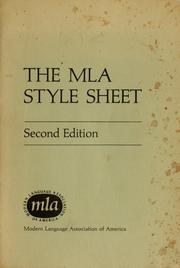
With the MLA Style Guide, 8th Edition, MLA Style is going back to its roots as a pamphlet, back when it was known as the MLA Style Sheet. I’m kidding, of course, but the 8th has slimmed down considerably.

But it apparently inspires strong passions, including Dallas Liddle’s “Why I hate the MLA Handbook” and Dallas Rossman Regaignon’s “Why I love the MLA Handbook.”Their reasons are basically the same: they hate/love its new flexibility.

The 8th edition has a philosophy of “containers,” which attempts to demystify the style for students and the rest of us. Herewith a few observations:

stylesheet

Figure 2. Where it all began, complete with spiffy Dewey Decimal number at the Open Library

1. Examples for in-text citation (which are very few) look just like the old MLA Handbook styles.

2. But if you look at the examples for documentation and Works Cited, your first thought may be, as mine was, “Cool! Commas, commas, commas for everything. This is like The Chicago Manual of Style 16! What an exciting meeting of the minds for the two competing styles to get together.”

3. URLs are back, but the detestable “Print.Print.Print” is gone.

4. There’s a whole list of “optional” elements, though, and the language used is user-friendly and sort of touching in its “you’re the Decider, so you decide” prose.

  • Book series title? You decide (p. 52).
  • Date of access for a web site? You decide (p. 53).
  • Place of publication (in the index under, for some reason, “cities of publication”)?  Since this “serves little purpose today” (51), yes, indeed–you decide.

5. What’s not optional: spell out “translated by, edited by” and so on in the Works Cited entry, same as in Chicago Manual of Style 16 14.78 and following, except that Chicago abbreviates them in notes. MLA does not.

6. And “pp.” is back, in the Works Cited.

7. But the most heinous and bedevilling of distinctions, as pointless as ever, is back: having to put in the issue number if a periodical is paginated by number and having to omit it if it is paginated by volume.

It’s right there on pp. 39-40.  If the journal is paginated by ISSUE, include the issue number. If it’s paginated by VOLUME, don’t.

How many hours have been wasted on trips to the library because you–okay, I–forgot to check this detail? Say you have an issue from January 1901. How do you know, except by looking at previous volumes, whether this is numbered by ISSUE or by VOLUME?

Answer: You don’t. You can’t. So if you didn’t write it down, back to the library you go to find out.  That’ll teach you–or, well, it taught me–to check this detail every single time.

mlaexample

Figure 3. The 7th edition and its sweet, agnostic system for volume.number.

The MLA mercifully axed this one in the 7th edition. In section 5.4.2, even their entries for paginated-by-year periodicals like Critical Inquiry use the issue number. Issue numbers for all!

I thought that the 7th edition had put a stake through the heart of this rule forever. But as if rising from the grave, the undead Volume.Number (only if paginated by issue, remember!) rule is back. In contrast,  Chicago 16 14.18 says that the number “may be omitted” but doesn’t prescribe it.

Summary: MLA has worked hard to simplify its rules, and ultimately we’ll all follow whatever they tell us anyway, as best we can. Our opinion is a moot point, or, as Joey said on Friends, “a moo point. You know, like a cow’s opinion: it doesn’t count.”

Anything that brings the two major style guides in English closer together is a step in the right direction.

Some serious sites that describe the differences:

MLA: https://www.mla.org/MLA-Style/What-s-New-in-the-Eighth-Edition

Purdue OWL: https://owl.english.purdue.edu/owl/resource/747/22/

https://www.easybib.com/guides/citation-guides/mla-8/mla-7-vs-mla-8/

At Stanford, September 19: Jack London: Apostle of the American West

Jack London: Apostle of the American West

Centennial Celebration, Symposium, and Exhibition at Stanford
TIME AND DATE

Monday, September 19, 2016

4:15 – 6:45 pm

Note: This event is currently at capacity. Registered attendees will be admitted up to capacity on a first-come, first-served basis. A recorded broadcast by C-SPAN will be made available to after the event for those who are unable to attend.

http://west.stanford.edu/events/jack-london-apostle-american-west

Participants

Jeanne C. Reesman, University of Texas at San Antonio, Professor of English

Sara (Sue) Hodson, Huntington Library, Curator of the Jack London Papers
·   Both Reesman and Hodson will be presenting on Jack London and his photojournalism.

Donna M. Campbell, Washington State University, Professor of English
·   Campbell will be presenting on Jack London’s literary influences on the American imagination and his relationship to other western fiction writers.

Peter Blodgett, Huntington Library, Chief Curator of Western Manuscripts
·   Blodgett will be presenting on the history of the late 19th and early 20th centuries in California and the historical and cultural events that shaped Jack London’s literary themes and lifestyle.

Moderated by Professor Bruce Cain, Spence and Cleone Eccles Family Director Bill Lane Center for the American West

With fellow panelists Jeanne Campbell Reesman (UTSA), Peter Blodgett (Huntington Library), and Sara S.Hodson (Huntington Library), I spoke last night at the inaugural event of The Bill Lane Center for the American West at Stanford University. A great audience turned out for the talks, which will be broadcast on C-SPAN in October. Our thanks go out to the Bill Lane Center for the American West, Marc Levin, Bruce E. Cain, and Preeti Hehmeyer for this wonderful experience.

Interview on Jack London from jacklondons.net

A longtime and valuable site for Jack London studies, Dave Hartzell’s jacklondons.net, is giving a “not found” message, so it may be down permanently.

You can find its archives at the Wayback Machine, and if you’re interested in any of the content, you may want to look at it while you still can: https://web.archive.org/web/20160310175855/http://www.jacklondons.net/

I did an email interview with Dave Hartzell for the site in 2010, and, since I don’t have another copy of it, I’m reposting it here.

Please trace the origin of your interest in Jack London.

Donna Campbell

My interest in Jack London began as part of a more general interest in turn-of-the-century American culture. After reading naturalist authors such as Frank Norris, Theodore Dreiser, and Stephen Crane, I read Martin Eden and The Sea-Wolf and was struck by the ways in which those novels, though prompted by very different experiences, reflected the themes of their works. From his letters and other writings it’s clear how much London, like the others, admired Spencer and Darwin, but there’s an intensity about the ways that London depicts class and gender issues that makes reading his work really compelling.

Later on, I read the California novels (Valley of the Moon, Burning Daylight, and The Little Lady of the Big House) and was struck by how hard he worked to create—and to educate his readers about—an agrarian alternative to what was already becoming a high-stress, industrialized way of life. The contrast between those idyllic California romances about living on the land and the reality of daily writing that London had to complete to keep his ranch going is striking. One of the things London does best is to think about what’s lost and what’s gained when people—as individuals and as societies—rush to be “modern.”

In higher education American literature studies, does London have a high “standing”?
Not exactly, although the situation is improving thanks to good scholarship from a multitude of perspectives, including work by Jeanne Campbell Reesman, Earle Labor, Earl Wilcox, Susan Nuernberg, Jacqueline Tavernier-Courbin, Lee Clark Mitchell, Donald Pease, Jonathan Auerbach, the essayists in Reesman and Cassuto’s Rereading Jack London and in Reesman and Hodson’s Jack London: One Hundred Years a Writer, and the authors of recent essays about him in American Literature and other journals. For someone who lacks the high standing in the academy of a William Faulkner or a Toni Morrison, London inspires a surprising amount of critical prose. New approaches to his work and his politics, including interest in London’s journalism, his South Seas tales, and his socialist stories, should help his critical reputation.
In teaching London’s works, what do you emphasize and hope your students understand?
When teaching London to undergraduates, I talk about London as a bridge between the nineteenth and the twentieth century. We talk about naturalism, of course, but we also discuss style. London’s style sometimes veers into the sentimental rhetoric of the nineteenth century, but when reading his crisp and sometimes pitiless descriptions (in “To Build a Fire,” for example) and his handling of sentences, it’s hard to imagine a writer like Ernest Hemingway if London hadn’t come before. In reading passages closely with my students, I also try to point out the highly conscious ways in which he uses syntax, word choice, and point of view; this helps to dispel impression students have that all London did was to dash off experiences and ship them off to magazines. In graduate classes, we discuss London in light of work we’ve been reading the ways in which cultures construct race, class, and gender. We also discuss some of the “untapped areas” (below).
Aside from the “He was a writer of dog stories” canard what are some of the misunderstandings about London and his works?”
That’s the most common misapprehension about London; another is that he wrote only juvenile fiction. Although many writers in the late nineteenth and early twentieth century wrote for children as well as for adults, there’s been a division between “children’s literature” and “literature written for adults.” Recent attempts to break down that barrier might help a reconsideration of some of London’s work.

Also, as critics have said, London’s a better writer of short stories than of novels.

Jack London’s real-life world, from the turn of the century to the First World War, seems “dated” to young readers who know nothing of the Klondike or socialism. What is there in his work to appeal to a new generation of readers?
I’m guessing that young readers would be interested in the same features that young readers have always liked about London’s prose: vivid descriptions, fresh prose, exotic locations, and lots and lots of adventure (with a little violence for good measure). Can readers still read “To the Man on Trail” or “To Build a Fire” and shiver with the cold that he describes, even if they don’t know London’s views on race or socialism? I think they can.
Are there untapped areas of London scholarship? Please give some examples of research that needs to be done.
Jeanne Campbell Reesman and Sara S. Hodson would have much more to say about this than I do, but here are some possibilities. Some have already been the subject of articles and books, in fact:
  • Sustainable agriculture, agricultural experimentation, and so on in the California novels.
  • Discussions about masculinity, race, body culture, and food culture in the Progressive Era
  • London and celebrity culture
  • London and other writers, especially women writers
  • London and race
  • London’s speculative and science fiction writings
  • Travel, empire, tourism, and London’s South Seas writing
What are your own current areas of London research?
I’ve published on London and gender in Martin Eden, on London and landscape in The Valley of the Moon, and on London and Edith Wharton in The Little Lady of the Big House; in addition, I have work in progress for the Blackwell Companion to the Modern American Novel, for the proposed MLA book Approaches to Teaching Jack London, and for an essay on Rose Wilder Lane as London’s first biographer.
[Update: You can find a number of these completed projects online if you go to the WSU Research Repository link on the sidebar.]

Bitter Tastes is now available

My book Bitter Tastes: Literary Naturalism and Early Cinema in American Women’s Writing is now available from the University of Georgia Press.

You’ve already seen the list of women writers it covers, so here’s the Table of Contents.

Introduction

Chapter 1

Grim Realism and the Culture of Feeling: Rebecca Harding Davis, Elizabeth Stuart Phelps, and Lillie Chace Wyman

Chapter 2

The Darwinists: Borderlands, Evolution, and Trauma

Chapter 3

Bohemian Time: Glasgow, Austin, and Cather

Chapter 4

Red Kimonos and White Slavery: The Fallen Woman in Film and print

Chapter 5

Where Are My Children? Race, Citizenship, and the Stolen Child

Chapter 6

“Manure Widows” and Middlebrow Fiction: Rural Naturalism in the 1920s

Chapter 7

Waste, Hoarding, and Secrets: Modernist Naturalism and the Servant’s Body


At the press site: http://www.ugapress.org/index.php/books/index/bitter_tastes

At Indiebound: http://www.indiebound.org/search/book?searchfor=bitter+tastes

At Powell’s: http://www.powells.com/book/bitter-tastes-9780820341729/61-0

At Amazon: https://www.amazon.com/gp/product/082034172X/ref=oh_aui_detailpage_o00_s00?ie=UTF8&psc=1

Alexander Hamilton, Gertrude Atherton, and John O’Hara Cosgrove

Screen Shot 2016-07-28 at 11.42.20 AMI’ve recently been reading through some letters from John O’Hara Cosgrove (link) , the editor of Everybody’s Magazine, to Owen Wister, the author of The Virginian (1902). My principal interest is Cosgrove’s connection with Frank Norris, who had worked at The Wave when Cosgrove was its editor, and his thoughts on Jack London, but this excerpt gives a good sense of what editors–or at least this editor–was thinking might sell in 1902.

In 1902, the California novelist Gertrude Atherton (today best known for her novel Black Oxen, 1922) published The Conqueror: Being the True and Romantic Story of Alexander Hamilton (New York: Macmillan and Company, 1902). By the time she republished it in 1916, the book had acquired a slightly less sensational title: The Conqueror: A Dramatized Biography of Alexander Hamilton (New York: Frederick A. Stokes Company, 1916).

Responding to the book, Cosgrove pitched Wister, as he often did, about participating in a series of articles “treating real men as though they were characters in fiction”:

I have just been reading Mrs. Atherton’s book on Alexander Hamilton. The form, which is really a departure, gave me a very clear impression of the subject’s individuality.  It represented a form of treatment that I have often urged using and treating real men as though they were characters in fiction.  I mean using the fiction method to project the personality of the individual.  This seems to have been done very well by Mrs. Atherton, and if we could have in the magazine a series of five-thousand word interviews with Washington, Jefferson, Madison, Adams, Daniel Webster Henry Clay and their like, selecting a strenuous moment in their careers & putting in an appropriate background, it would make a capital series.  Mrs. Atherton has the Hamilton one under way. (23 July 1902)

But apparently what worked well for a “romantic story” did not translate as well into the type of fictional interview that Cosgrove had in mind:

Entre nous, Mrs. Atherton tried Hamilton for us, and turned out a mighty poor thing, which I had to return.  It was slap-dash, rather common, frivolous, and quite outside the idea—rather crude journalism, in fact.  It is mighty difficult to get that sort of thing accomplished just as it must be done. (6 August 1902)

“Mighty difficult,” indeed. This raises a question for all those who would undertake biography or speculative biography: How much more sensationalism or sentimentality did Atherton’s unpublished draft contain to be labeled “common, frivolous” and “crude journalism”?