A recent article on Vulture.com makes a case for a little “creative borrowing,” otherwise known as plagiarism, on Dorothy Parker’s part as an attempt to revive her fading career. It argues that Parker saw Nabokov’s Lolita well before she reviewed it (favorably) for Esquire, when it was being handed around in literary circles by a careless Edmund Wilson, and that she borrowed the title for her short story “Lolita”:
Had this, in fact, been her second look at the book? The trail, it seems, leads to Edmund Wilson. In 1954 and 1955, Parker was a regular guest at his gatherings at the Algonquin when he was in New York, though his other friends objected to her habit of coming “an hour late” and offering odd excuses, like having to walk her sister’s dog. She is more than likely to have visited him in Talcottville as well, where Wilson had been indiscreet with the manuscript. He would have been very likely to also impress on her his major points about Lolita: that the novel was “repulsive,” that it would never be published in the United States, and that Nabokov was vehement about people not knowing that he was the author. Uninspired, a little desperate, and nearly broke, Parker may have been susceptible to an intriguing prompt. Being Dorothy Parker, she also probably could not resist the opportunity to sting the current “golden boy” of The New Yorker by letting him know that she was aware of his secret.
I had read once that Nabokov got the name from Lillita McMurray, the 16-year-old bride of Charlie Chaplin back in the mid-1920s, who was expensively divorced from him a few years later.
But Nabokov did not need to go that far to get the name, nor did he invent it, as Google’s handy ngram viewer shows:
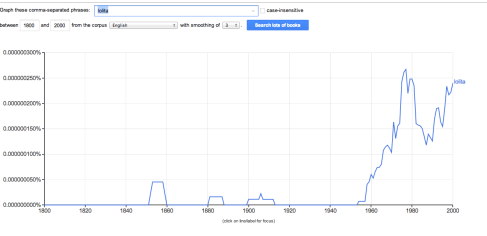
“Lolita” is used as a name as early as 1851, although it clearly takes a huge leap once Nabokov’s book comes out. Among others, it appeared in a Bret Harte story of 1899, Charles Lummis’s Out West magazine in 1907, and as the protagonist’s name in Owen Wister’s “La Tinaga Bonita” in Harper’s in 1895.
But those are old usages, you say? How about Bill Johnson’s Ghost Road (1950) or, yes, a Nancy Drew mystery, Carolyn Keene’s 1954 The Ringmaster’s Secret?
Nabokov may have reinvented the name, and Parker may have borrowed it, but the story doesn’t show any parallels. Yes, as the article says, there’s a drive in a car, not exactly uncommon in American literature. But I had always read Parker’s story as being about a theme she’d discussed with Robert Benchley back in the 1920s: what if a man left his beautiful, fascinating wife to take up with a mousy, ordinary mistress?
Parker’s “Lolita” is a story on a familiar theme in her works: the frustratingly obtuse and domineering person (often a mother), who can’t understand why people respond to her the way that they do. In the story, which is narrated from a third person limited omniscient point of view, Mrs. Ewing, Lolita’s mother, is another familiar Parker character, the flirtatious and feminine Southern(ish) belle who can’t understand what the handsome John Marble sees in her daughter.
There’s more than a hint of sexual competition with her daughter in Mrs. Ewing’s every move: why isn’t he paying attention to her? She undercuts her daughter at every turn, destroying their evenings together as she natters on about nothing and believing that Ewing will eventually leave Lolita: “I say, ‘That’s right, honey, you go ahead and be happy just as long as you can'” (391). As she says to a friend at the end of the story, ”
“A man like John Marble married to a girl like Lolita! But she knows she can always come back here. This house is her home. She can always come back to her mother.”
For Mrs. Ewing was not a woman who easily abandoned hope.
So far, this doesn’t bear much resemblance to Lolita, but it bears a great deal of resemblance to other Parker stories where deluded (and horrible) women wait in hope to destroy someone they are supposed to love. Exhibit A for this would be “The Banquet of Crow” (Esquire, 1957–another late story), but there are others, too.
So did Parker borrow the name from Nabokov? Maybe. Judging by the 1950s uses, it might have been one of those names that crops up in cycles, like Jason and Jennifer or Owen and Emily.
Would she have done it to get a little extra publicity, knowing that Nabokov’s book might be published or at the very least that the name would garner a little attention from literary circles? Probably.
Is there a hint of Nabokov’s tale in the story of a harridan mother competing with her daughter for the same man, only to lose out to the daughter’s superior if inexplicable charms? Uncomfortably, yes.
But did she steal the plot from Nabokov, and is this character an anomaly in the Parker canon? Absolutely not.
[Edited to add: Would Parker really have gone to Talcottville, which is a very small town on SR 12D near Boonville, NY? (I have a picture somewhere of me standing in front of Edmund Wilson’s Talcottville home, the “stone house” that he wrote about, that’s an ineradicable record of my literary geekitude.) Parker, of whom it might be said, “There is no city but New York, and Parker is its prophet”?]
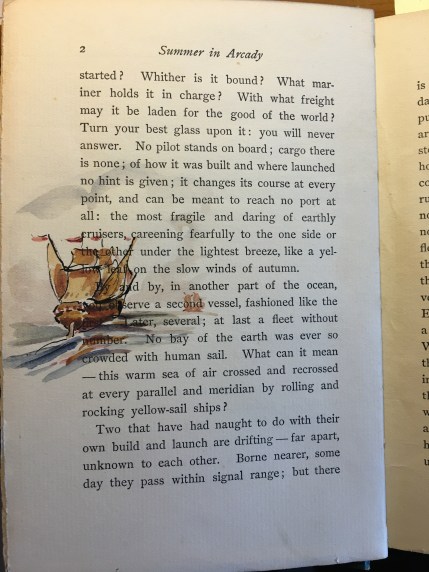
 Today I’ve been rereading James Lane Allen’s Summer in Arcady: A Tale of Nature (New York: Macmillan and Co., London: Macmillan & Co., Ltd., 1896) and noticed something that I hadn’t remembered, something not covered in the yellow Post-Its that mark the content–marginalia.

 At
At 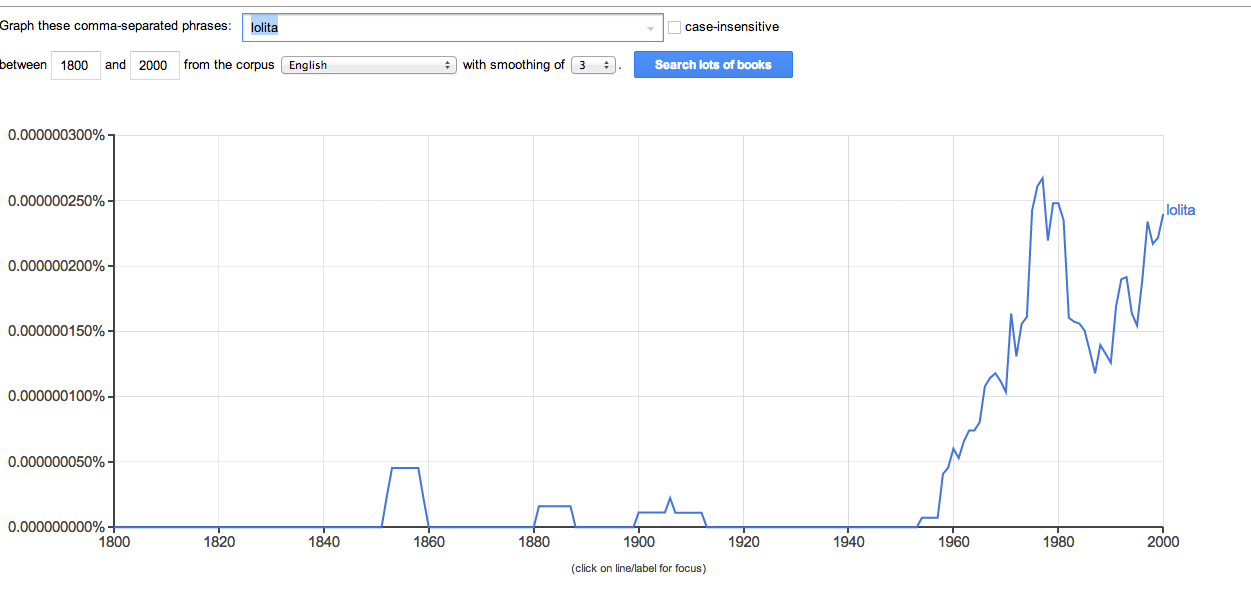
 Donna M. Campbell