
Figure 1: New and Improved.
Edited to add: About #7 below: I even made a chart a few years back, when I was writing “Fiction: 1900 to the 1930s” for American Literary Scholarship, to indicate which periodicals were numbered by issue and which by volume: http://public.wsu.edu/~campbelld/journals.htm
Now that the requirement is back in the 8th edition, use it in good health.
***
I recently cracked open the new MLA Style Guide, 8th edition. What follows are a series of decidedly lighthearted and not at all scholarly reflections, so if you’re looking for something serious, ignore this post.
With the MLA Style Guide, 8th Edition, MLA Style is going back to its roots as a pamphlet, back when it was known as the MLA Style Sheet. I’m kidding, of course, but the 8th has slimmed down considerably.
But it apparently inspires strong passions, including Dallas Liddle’s “Why I hate the MLA Handbook” and Dallas Rossman Regaignon’s “Why I love the MLA Handbook.”Their reasons are basically the same: they hate/love its new flexibility.
The 8th edition has a philosophy of “containers,” which attempts to demystify the style for students and the rest of us. Herewith a few observations:
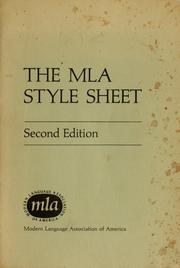
Figure 2. Where it all began, complete with spiffy Dewey Decimal number at the Open Library
1. Examples for in-text citation (which are very few) look just like the old MLA Handbook styles.
2. But if you look at the examples for documentation and Works Cited, your first thought may be, as mine was, “Cool! Commas, commas, commas for everything. This is like The Chicago Manual of Style 16! What an exciting meeting of the minds for the two competing styles to get together.”
3. URLs are back, but the detestable “Print.Print.Print” is gone.
4. There’s a whole list of “optional” elements, though, and the language used is user-friendly and sort of touching in its “you’re the Decider, so you decide” prose.
- Book series title? You decide (p. 52).
- Date of access for a web site? You decide (p. 53).
- Place of publication (in the index under, for some reason, “cities of publication”)? Since this “serves little purpose today” (51), yes, indeed–you decide.
5. What’s not optional: spell out “translated by, edited by” and so on in the Works Cited entry, same as in Chicago Manual of Style 16 14.78 and following, except that Chicago abbreviates them in notes. MLA does not.
6. And “pp.” is back, in the Works Cited.
7. But the most heinous and bedevilling of distinctions, as pointless as ever, is back: having to put in the issue number if a periodical is paginated by number and having to omit it if it is paginated by volume.
It’s right there on pp. 39-40. If the journal is paginated by ISSUE, include the issue number. If it’s paginated by VOLUME, don’t.
How many hours have been wasted on trips to the library because you–okay, I–forgot to check this detail? Say you have an issue from January 1901. How do you know, except by looking at previous volumes, whether this is numbered by ISSUE or by VOLUME?
Answer: You don’t. You can’t. So if you didn’t write it down, back to the library you go to find out. That’ll teach you–or, well, it taught me–to check this detail every single time.

Figure 3. The 7th edition and its sweet, agnostic system for volume.number.
The MLA mercifully axed this one in the 7th edition. In section 5.4.2, even their entries for paginated-by-year periodicals like Critical Inquiry use the issue number. Issue numbers for all!
I thought that the 7th edition had put a stake through the heart of this rule forever. But as if rising from the grave, the undead Volume.Number (only if paginated by issue, remember!) rule is back. In contrast, Chicago 16 14.18 says that the number “may be omitted” but doesn’t prescribe it.
Summary: MLA has worked hard to simplify its rules, and ultimately we’ll all follow whatever they tell us anyway, as best we can. Our opinion is a moot point, or, as Joey said on Friends, “a moo point. You know, like a cow’s opinion: it doesn’t count.”
Anything that brings the two major style guides in English closer together is a step in the right direction.
Some serious sites that describe the differences:
MLA: https://www.mla.org/MLA-Style/What-s-New-in-the-Eighth-Edition
Purdue OWL: https://owl.english.purdue.edu/owl/resource/747/22/
https://www.easybib.com/guides/citation-guides/mla-8/mla-7-vs-mla-8/
 Donna M. Campbell