Did Stephen Crane read Emily Dickinson? Better still, did W. D. Howells read Dickinson’s poetry to Crane?

Screen Shot 2018-06-26 at 10.58.18 AMDid Stephen Crane read Emily Dickinson? And was he inspired by her poetry?

Gregory Laski (@ProfL12) asked about it this morning, and I responded “Yes, Howells read to him from Dickinson. It’s somewhere in Hamlin Garland’s memoirs”  (or words to that effect) and also in Paul Sorrentino’s Stephen Crane: A Life of Fire.” (It’s  probably also in Stephen Crane Remembered, a copy of which I own but can’t find right now.)

This is what I’d always read and seen: one day in 1893, after Garland had introduced Crane to Howells, Crane visited Howells at home and Howells read to him from Emily Dickinson. It’s a pretty great story.

But what’s the source? Here’s one of those down-the-rabbit-hole searches that’s always more fun than whatever writing you’re doing at the time. Here are some of those paths, numbered so that you can see the process; if you’re not interested, skip to the end.

Mildly dead ends:

  1. Garland talks about meeting Crane in Roadside Meetings (1930), but he apparently didn’t discuss this. (I say “apparently” because I can’t find my copy of the book.)

    220px-Hamlin_Garland_1891

    Hamlin Garland

  2. Selected Letters of Hamlin Garland (ed. Keith Newlin & Joseph McCullough) doesn’t mention Dickinson and Crane except to say that Garland mistakenly thought he had met Dickinson (he met her niece).
  3. Hamlin Garland: A Life (Newlin) doesn’t mention Dickinson in the index but does state that Garland “had arranged an introduction to Howells in April 1893, hoping that the senior writer could help Crane place his poetry with Harper’s Monthly” (192).
  4. The Stephen Crane Encyclopedia (Stanley Wertheim) has no entry for Emily Dickinson.
  5. Susan Goodman and Carl Dawson’s William Dean Howells: A Writer’s Life does not repeat the WDH reading to SC episode, but it does report that Crane’s excursions into flophouses and breadlines were at the urging of Howells and Garland and includes this intriguing detail: “With Crane and other friends or by himself, Howells roamed New York’s ethnic neighborhoods” (342). Howells was about 60 at the time, but it’s a great image to think of him with Crane roaming the neighborhoods together, though WDH would probably not have gone at night when Theodore Roosevelt as police commissioner was checking up on the policemen on the beat.

Getting closer:

  1. howells

    W. D. Howells. Source: Picture I scanned in 1997 that has since made its way around the web.


    Howells reading Dickinson’s poems to Crane is  in the Sorrentino biography: “Garland insisted that Crane show the poems to William Dean Howells, who already knew of Crane’s interest in poetry from their meeting a year earlier, when Crane had been impressed with Emily Dickinson’s creativity as Howells read her poetry to him” (130). The note references The Correspondence of Stephen Crane, p. 54

  2. On to the Correspondence (edited by Stanley Wertheim and Paul Sorrentino). Here’s what’s on p. 54 as a footnote to a letter from Howells to Crane dated April 8, 1893 that reads in part “Personally I know nothing of you except what you told me in our pleasant interview”: “Wearing a suit borrowed from his journalist friend John Northern Hilliard, Crane had tea or dinner with Howells in his home on what is now Central Park South one evening in the first week of April 1893. Howells read Crane some of Emily Dickinson’s verses at this time, and her terse, cryptic lines may have influenced the style of The Black Riders.” There’s no citation for this event, however.

Closer still:

  1. Screen Shot 2018-06-26 at 12.29.23 PM

    Stephen Crane, from Stephen Crane Studies

    In The Crane Log: A Documentary Life of Stephen Crane 1871-1900, p. 90, there’s more detail: “Early April. Wearing a suit borrowed from his friend John Northern Hilliard, Crane visits Howells in his home at 40 West 59th Street, New York City. At this time, or perhaps on a later visit, Howells reads some of Emily Dickinson’s poems to him, and Crane is deeply impressed (Barry, 148).”

  2. The citation is to John D. Barry, “A Note on Stephen Crane.” Bookman 13 (April 1901): 148.  If you have access at the University of Virginia, or if you are time traveling in the year 2000 and looking this up prior to whenever they took all their public access stuff offline and hid it behind a firewall, you can get it here: https://search.lib.virginia.edu/catalog/u2739147.  <editorial rant> A great resource was lost to literary studies once UVA sealed up its collections. </editorial rant>

Here it is!

Screen Shot 2018-06-26 at 11.56.58 AMHere is the original passage *that apparently inspired the anecdote about Howells reading Dickinson to Stephen Crane: “One evening while receiving a visit from Mr. Crane, Mr. Howells took from his shelves a volume of Emily Dickinson’s verses and read some of these aloud. Mr. Crane was deeply impressed, and a short time afterward he showed me thirty poems in manuscript, written, as he explained, in three days” (148).


How credible is this source?

John D. Barry knew Crane, and according to The Stephen Crane Encyclopedia, “On 14 April 1894 Barry read some of the poems that would comprise The Black Riders in front of the Uncut Leaves Society at Sherry’s since Crane was averse to public speaking and refused to read them himself. Barry believed that Crane’s poetry had been inspired by Emily Dickinson, whose verses, Barry maintained, had been read to him by William Dean Howells” (20).  (bold for emphasis)

But look at Wertheim’s language here: “believed, maintained.” Wertheim has a point, which he emphasizes with this hedging language: All we really have is Barry’s word, not quite a year after Crane’s death on June 5, 1900, about Howells reading to Crane.

Should we believe it?

On one hand, Barry knew Crane and was quite severely critical of Maggie, calling it “morbid” and “unhealthful.” He believed in Crane’s poetry, however, and seems to have discussed it with him. It wouldn’t have been unusual for Howells to read aloud; to argue by analogy, Henry James and Edith Wharton did this all the time.  Howells’s kindness to young authors was legendary, and Barry was writing shortly after Crane’s death when memories were fresh.

On the other hand, Barry was a novelist, a playwright, and an instructor at the American Academy of Dramatic Arts. Perhaps the story was embellished because it would make more of an impression for the point he was trying to make in the article: that Stephen Crane should not be classed with the (French) symbolists because he was inspired by that most American of poets (aside from Whitman), Emily Dickinson.

Your thoughts? 


*With a little digging, you can find Bookman (not The Bookman, published in London and available at Hathi Trust) at archive.org here:

https://archive.org/stream/bookman54unkngoog#page/n240/mode/2up/search/stephen+crane

Biography Corner: Here come the Brits (Jane Dunn, Daphne du Maurier and Her Sisters; Selena Hastings, The Secret Lives of Somerset Maugham; Charlotte Gordon, Romantic Outlaws: The Extraordinary Lives of Mary Wollstonecraft and Mary Shelley)

Short takes on three more biographies, this time on British writers.

du_maurier_cover_2495239aJane Dunn, Daphne du Maurier and Her Sisters 

The daughters of the theatrical manager and actor Gerald du Maurier (and granddaughters of George du Maurier, author of Trilby), Angela, Daphne, and Jeanne grew up in the shadow of his histrionic personality and a “thundering homophob[ia],” as Nicholas Shakespeare puts it in The Telegraph, which did not deter the sisters from preferring lesbian relationships.  Daphne, author of Rebecca, Jamaica Inn, and other novels, is the subject of the most compelling sections; it was difficult to keep track of the other sisters’ lives and pursuits (painting, travel) when the most interesting parts were about Daphne’s writing.

Back when I first read Rebecca, the most memorable scene was the one where the narrator, “I,” goes into the morning room and lists every kind of stationery possible all ready for writing. Rebecca is a story of love (for a house), of desire (for Rebecca, on the part of “I” and Mrs. Danvers), and of loss; Du Maurier beautifully captures all three.  Based on this biography, you might not want Du Maurier for a friend or family member, but you’re glad she wrote engaging fiction.

Who would be in your “Glad They Wrote but Happy Not to Have Met Them” Hall of Fame?

Here’s a dismissive review from The Guardian https://www.theguardian.com/books/2013/mar/03/daphne-du-maurier-sisters-jane-dunn-review and a more positive one from The Telegraph http://www.telegraph.co.uk/culture/books/bookreviews/9899554/Review-Daphne-du-Maurier-and-Her-Sisters-by-Jane-Dunn.html

maughamSelena Hastings, The Secret Lives of Somerset Maugham
Full disclosure: I went through a serious Somerset Maugham period around my senior year in high school and read everything I could find: Of Human Bondage (read several times), Cakes and Ale (ditto, and I didn’t even know that Hardy was supposed to be the basis), The Moon and Sixpence (I did know about Paul Gauguin), The Painted Veil, The Razor’s Edge; much later, I read Liza of Lambeth. I didn’t know until later that Maugham is supposed to be “at the very front row of the second rate,” as he put it.

The “secret lives” part sounds like something the publisher put in to boost sales, but this is a deeply researched biography and an engaging one to read. Maugham’s bisexuality is apparently the “secret” but doesn’t seem to have been terribly secret back in the day, and it seems even less so now. What I hadn’t known about was his successful career as a playwright, his espionage activities, since I’d never read the Ashenden stories, his later travels in the South Seas, and his later life more generally. Along the way Hastings uncovers blackmail payments, possible sexual abuse, and some very frank letters. Maugham seems to have kept a compartmentalized and well-ordered life but then chosen partners that would blow it up with lots of drama–his wife, Syrie, the decorator; and his partner, Gerald Haxton. Here’s David Leavitt’s NYTimes review: http://www.nytimes.com/2010/07/25/books/review/Leavitt-t.html

To put it in Hollywood terms: if you’re picturing the urbane but kindly Maugham figure portrayed by Herbert Marshall in a couple of movies, you’d be disappointed. Clifton Webb in Laura and just about everything else is much nearer the mark.

outlawsCharlotte Gordon, Romantic Outlaws: The Extraordinary Lives of Mary Wollstonecraft and Mary Shelley

I had the good fortune to hear Charlotte Gordon’s presentation about this book at The Mount in August 2016. A dual biography would seem to be a natural fit for Wollstonecraft and Shelley, yet no one had done it, and the result is a much more satisfying reading of both their lives. Wherever there was trouble, Wollstonecraft traveled into the midst of it (Paris in the 1790s), wrote about it, and made her own way; her daughter, after a daring elopement with Shelley, seems instead to have been dragged all over Europe by him. Despite their (intermittent?) love for one another and her writing of Frankenstein and other novels, one senses her exhaustion by incessant childbearing and child deaths as well as by trying to get Shelley to focus on their family for more than a few minutes at a time.

Gordon’s method is to switch between the Marys in alternating chapters. While generally engaging, it has an effect something like this: “Oh, look at how happy Fanny Imlay seems to be as a child.” Next chapter: “Oh, no.” Do read it, though.

Here’s Christina Nehring’s NYTimes review (click on picture).

Biography Corner: Short Takes on Clancy Sigal’s Black Sunset and Jean Stein’s West of Eden

Now that I’ve consolidated all the CV material here https://public.wsu.edu/~campbelld/news.htm, it’s time to post some updates on recent biographies. A lot of academics read mystery novels for fun, but biographies and history are my idea of a good escape read, so here are two that I read  last summer.

Clancy Sigal, Black Sunset 

sigalIt’s a commonplace (and a cliché) to say that Hollywood–and Los Angeles, for that matter–is not what it seems; isn’t that what Joan Didion’s writing has taught us? In Black Sunset, Clancy Sigal gives us a good idea of what it was really like to be an agent back in the 1950s. I was going to say “a brash agent,” but that’s an unnecessary adjective.  Sigal plays the Hollywood game well by day, with lots of lies and what might politely be called testicular fortitude, but he’s also an idealist, a radical, in a blacklist culture. He’s not afraid to tell stories on himself as well as about others, as when his considerable cadre of lady friends find out about one another and stage an ego-withering intervention.  Really, though, he’s a writer and not an agent, and that’s where this book leaves him: ready to write. Sigal died this past summer, but his voice is a living thing. Here’s a sample at LitHub: http://lithub.com/black-sunset-hollywood-sex-lies-glamour-betrayal-and-raging-egos/

westofeden

Jean Stein, West of Eden: An American Place

Jean Stein comes at the myth from a different position; she’s Hollywood royalty, the daughter of Jules Stein of MCA.  Like her book on Warhol muse and protégée Edie Sedgwick, Edie: American Girl (1982), of which I remember only its sense of hovering tragedy, West of Eden is an oral history, this time of places rather than persons. The book is divided into the addresses of five families: the Dohenys, the Warners, Jane Garland, Jennifer Jones, and the Steins. The first section, on the Dohenys, is the most sensational and will seem familiar to anyone who’s read Raymond Chandler’s The Big Sleep or The High Window, seen There Will Be Blood, or read about the Greystone mansion.  A mysterious shooting (murder or suicide?), a police coverup, a corruption trial–you’ll have to read it for yourself. One fun fact: did you know that the well-known and highly regarded science fiction writer Larry Niven was Doheny’s great-grandson? I didn’t. The other stories range from strange (the Warners) to profoundly disturbing (Jane Garland and mental illness) to deeply sad  (Jennifer Jones and her family). Stein’s chapter is more about the house itself –the parties there, its secret barroom, its ruined pavilion–but also has excerpts from Jules Stein’s unpublished memoir.

Next up: here come the Brits (Jane Dunn, Daphne du Maurier and Her Sisters; Selena Hastings, The Secret Lives of Somerset Maugham; Charlotte Gordon, Romantic Outlaws: The Extraordinary Lives of Mary Wollstonecraft and Mary Shelley)

Elaine Showalter, The Civil Wars of Julia Ward Howe

Ruth Franklin, Shirley Jackson: A Rather Haunted Life

In search of (lost) digital American literature archives

Screen Shot 2017-09-26 at 8.53.34 AM

Women writers at the original SSAWW site at Lehigh, still awaiting scholarly attention.

T

Or “Ubi sunt . . . ?” Where are the disappearing author archives of ten years ago?

In our English 573: American Authors and Online Editions class yesterday, the students and I discussed work by Sui Sin Far,  an essay by Mary Chapman, and chapter 3 from one of the books we’re reading this semester, Amy Earhart’s Traces of the Old, Uses of the New. 

Then we kept discussing current sites and lost sites, the individual sites put up as a labor of love in the late 1990s like those of Alan Liu, Voices from the Gaps, NativeNet, A Celebration of Women Writers etc. before the MLA had even adopted its standards for site information in 1999. We talked about how these sites had been made to make reading versions of unavailable texts available (pre-Google Books, remember) and, as Earhart describes, to make a more diverse set of  texts available.  We talked about Jean Lee Cole’s Winnifred Eaton archive, too, which has fortunately been resurrected here: https://jeanleecole.wordpress.com/winnifred-eaton-digital-archive/.

We discussed the difference between HTML and TEI, between (pre-DH? Certainly, as I’ve been told repeatedly, not DH) individual sites and the large, well-funded, and deservedly praised and vetted-by-scholars Walt Whitman Archive or The Mark Twin Project, not to mention the various ways in which we can look visualize data now.

Screen Shot 2017-09-26 at 9.16.19 AMWe looked at the underlying coding of the early HTML sites. I told them about the pre-Web Taylorology from 1993, that, when we looked at the code, of course did not change because it is plain text.
But we also went on a little virtual tour, sometimes courtesy of the Wayback Machine, and I told them about sites that had vanished completely, like Jim Zwick’s Mark Twain and Imperialism, or walled up their texts behind a paywall or university access, like the University of Virginia Text Center or the Women Writers Project–great and innovative projects, no question, but not now available to most of us.

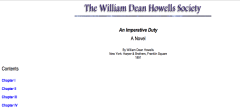
Screen Shot 2017-09-26 at 9.26.21 AMWe also looked at page that had once served a purpose, like the W. D. Howells novels typed or scanned, organized, and mounted on the web that had been given to the Howells Society by Eric Eldred.  (Using Eldred’s format for consistency, I scanned and corrected An Imperative Duty for the site, and it took a while.)
We don’t need these now as when we only had individual sites, the Making of America Site and Project Gutenberg. Now we have Google Books, Hathi Trust, and any number of exciting large-scale projects (just go to NINES and look); new ones are announced seemingly every day, and they’re great–metadata, maps, interactivity, great TEI encoding, or whatever.

I keep hearing that the era of the archive is over and so is the era of recovery.

But if it’s over, why are we still, in some cases, shoring up texts and authors that are in no danger of going away?  Why are we leaving the authors who were recovered on those early sites like the SSAWW one still lingering in a limbo–readable but maybe not findable (because metadata), not celebrated, and without all the modern digital accoutrements that would allow them to find a new audience?


New issue of Studies in American Naturalism: Review of Anne Boyd Rioux’s Constance Fenimore Woolson: Portrait of a Lady Novelist and Linda Kornasky’s review of Bitter Tastes

The new issue of Studies in American Naturalism is available at  http://muse.jhu.edu/issue/36848.  In addition to fine articles, it includes Linda Kornasky’s fine review of Bitter Tastes: Literary Naturalism and Early Cinema in American Women’s Writing (thanks, Linda!) and my review of Anne Boyd Rioux’s Constance Fenimore Woolson: Portrait of a Lady Novelist.  There’s also a great review by Sheila Liming of Meredith Goldsmith and Emily Orlando’s Edith Wharton and Cosmopolitanism (for which I wrote the Foreword).

I don’t think SAN would mind if I posted a few samples from a couple of them:

Kornasky on Bitter Tastes:

Donna Campbell’s substantial new study introduces a unique perspective on American women writers of literary naturalism. Campbell proposes that “placing women’s naturalism at the center rather than the periphery of the [naturalist] movement reveals an ‘unruly’ counterpart to the rules of classic naturalism” by Frank Norris, Theodore Dreiser, etc., which, she contends, “expresses an interest less in philosophical consistency in its treatment of determinism than in the complex, sometimes uneven workings of social forces that operate on female characters constrained with the extra complications of women’s biological and social functioning” (4). This alternative, re-orienting perspective suggests, nonetheless, that new attention should be paid not only to “unruly” naturalism written by women often overlooked in naturalism studies, but also to texts written by men usually not included there. Moreover, Campbell brings turn-of-the-century and early twentieth-century film into her study, paralleling naturalism and early film’s emphasis on visual “authenticity” (11).

My review of Rioux’s Constance Fenimore Woolson:

Anne Boyd Rioux opens her excellent new biography of Constance Fenimore Woolson with two indelible images that are the sum total of what most readers know about the author: in the first, “a woman jumps from the third-story window of her Venetian palazzo”; in the second, weeks later, a distraught Henry James sits in a boat in the middle of a Venetian lagoon, trying helplessly to submerge both the dresses and the record of their friendship, but the dresses “billow up like black balloons” (xiii). Unlike the dresses, Woolson’s critical reputation has been less than buoyant in the century since her death, although an edition of her complete letters (Complete [End Page 88] Letters of Constance Fenimore Woolson, 2012), numerous book-length critical studies and articles employing feminist approaches, and Rioux’s new collection of Woolson’s stories should do much to restore her reputation.

Rioux’s carefully chosen title, Constance Fenimore Woolson: Portrait of a Lady Novelist, signals this revival and Woolson’s struggle for acceptance, for it echoes James’s Portrait of a Lady, the work of an author whose reputation has shaded if not entirely effaced Woolson’s own in literary history. “Lady,” too, is particularly apposite, for Rioux’s running theme is what the literary world might have made of Woolson had they treated her as simply a “novelist” without the diminishing modifier “lady.” The book is thus a twofold portrait, not only of Woolson but of the literary world of high-culture magazines and publishers in which she found success but struggled to create a kind of writing that relied neither on the prosaic lack of idealism, as she saw it, in Howellsian realism, or the bloodless analytics of Jamesian psychology.

Biography corner: Robert Gottlieb’s Avid Reader and the New Yorker revolt of 1987

gottlieb [Note: like all the “biography corners,” these are informal impressions, not real reviews, so caveat emptor.]
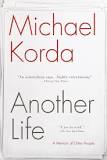
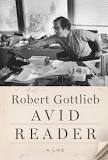
For lunch and breakfast reading this week, I’ve been reading Robert Gottlieb’s Avid Reader: A Life .   I’d been curious about Gottlieb ever since reading Michael Korda’s Another Life: A Memoir of Other People (2000) years ago, a book with great stories about publishing for those who enjoy relaxing by reading that sort of thing (that would be me) and who enjoy Korda’s stories about his life (also me).

anotherlifeIn Another Life, if I remember correctly, Gottlieb bursts on the scene at Simon & Schuster with immense talent, direction, and a love of books, and he (along with Korda) revitalizes the place. He’s a life force or maybe a publishing force, a Superman of books, until he leaves for Knopf in a whirlwind of energy some years later and The New Yorker in the distant future and I don’t know what after that because I haven’t finished Avid Reader yet.
In Avid Reader Gottlieb is much more modest and charming about his accomplishments than he has reason to be, and this is a generous memoir. Gottlieb doesn’t do the name-check-and-thank thing that a lot of memoirists do; he tells the stories of collaborations, things that worked, and a few things that didn’t. (Here’s Paris Review interview.)

Right now I’m in the section where he’s editing The New Yorker, which was a famous contretemps 30 years ago.

abouttown

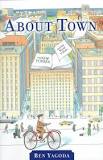
Ben Yagoda’s About Town, New Yorker book that looks promising.

Editorial aside: There’s a whole cottage industry devoted to memorializing The New Yorker, which you could spend your life reading if you had endless time, which I don’t, so I haven’t. Some are devoted to an ubi sunt lamenting the demise of its excellence, which is sort of like the perennial clickbait about whether SNL is still funny or not, so if you’re interested, those books are out there for you.

Back to 1987. With apologies to Mr. Gottlieb, I’m going to retell this in a nutshell, so put on your padded shoulders sweater, pouf up your hair ’80s style, and follow along.

In 1987, William Shawn, at nearly 80, had been the legendary editor of The New Yorker for a looooong time, with both the magazine and his magic ways (and neuroses) having survived Thomas Wolfe’s infamous attack “Tiny Mummies! The True Story of the Ruler of 43rd Street’s Land of the Walking Dead!”  in April 1965.  This was the piece that drew the famously reclusive J. D. Salinger out of hiding to attack the attackers, but that’s another story.

The 1987 story, as reported in an innocent time and place apparently so bereft of news that an editorial shakeup could inspire multiple stories, was that the new owner, S. I. Newhouse, had rudely booted Shawn from his perch and installed a young upstart.

Gottlieb’s version makes more sense and has a more humorous aftermath. This is my version of his version, so any mistakes are mine. The link above gives a different version.

  1. Newhouse meets with Shawn over lunch. Shawn says, “You’d probably prefer that I leave sooner rather than later.” Newhouse, not knowing this is his cue to say, “Of course not! You’re irreplaceable!” gives a quiet fist pump and says “Yes.”
  2. Shawn leaves thinking this is the first step in a process that will leave him in place. Newhouse leaves thinking “we’re done here” and installs Gottlieb.
  3. All or most of the New Yorker writers sign a letter saying that Gottlieb is a cad and a bounder, and that he should not take the job. They send it to him.  Oops, they sent the wrong letter. Would he mind not reading that one but read this one instead? Gottlieb, don’t take the job, and also, you’re a cad and a bounder (paraphrasing).
  4. Gottlieb gets to work.
  5. Lillian Ross, famous New Yorker writer and skewer-er of Hemingway and others, who was also Shawn’s lover and the author of an unpleasant memoir about their affair, Here but Not Here, demands that Gottlieb re-install Shawn at The New Yorker in some capacity, and, when he doesn’t, quits.
  6. Gottlieb hires people like Adam Gopnik, which some old-liners think is a mistake but which I am here to tell you, as a New Yorker reader, was a great decision.
  7. According to Gottlieb:

    “To end the Lillian saga: Some time later someone passed along to me a movie script she had written about a great and noble magazine editor ousted by a coarse mogul and replaced by a clever but brash young book-publishing executive (not an editor, however; a public relations/marketing man.) The heroine–an intrepid young girl reporter–came to the rescue when this poor specimen failed at the job, by convincing the mogul to bring back the great man. And then–this was the beauty part–she married the young publishing guy, who had gone back to where he belonged: marketing.”

The moral of this post, and maybe of this book, could be that we all do this because we believe that reading and writing are at the center of who we are, and maybe a little bit that writing well is the best revenge.

A Legacy Review & Updates to the Regionalism Bibliography

I haven’t finished adding all the books yet, but new articles have been added to the Regionalism bibliography at http://public.wsu.edu/~campbelld/amlit/regbib.htm.

You can also read my Legacy review of Laura Laffrado’s Selected Writings of Ella Higginson: Inventing Pacific Northwest Literature in Legacy: A Journal of American Women Writers Volume 34, Number 1.

Project MUSE http://bit.ly/2u8dkq6

JSTOR http://bit.ly/2u8l2QU

Meanwhile, the list of non-work-related books I haven’t written about here continues to grow:

  • Clancy Sigal, Black Sunset and Jean Stein, West of Eden: An American Place
  • Jane Dunn, Daphne du Maurier and Her Sisters
  • Selena Hastings, The Secret Lives of Somerset Maugham (which despite the title is good)
  • Charlotte Gordon, Romantic Outlaws: The Extraordinary Lives of Mary Wollstonecraft and Mary Shelley
  • Elaine Showalter, The Civil Wars of Julia Ward Howe
  • Ruth Franklin, Shirley Jackson: A Rather Haunted Life

Upcoming posts: updates, research workflow, “Biography Corner”

2017-07-05 11.14.57

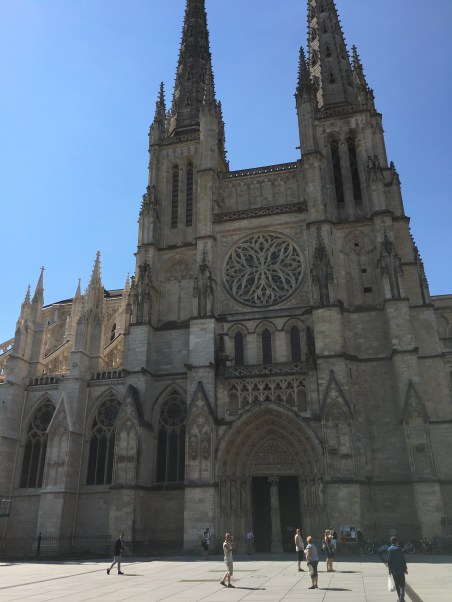
Figure 1. Cathedral of St. André in Bordeaux Not the conference venue, but nice all the same, wouldn’t you say? 

The apologies-for-not-posting blog post is a well-worn convention in itself, so this is my version.  I have no excuses except travel to ALA, to DHSI, and to the SSAWW conference in Bordeaux:

But posts are on the way:

Updates to the Amlit site.

A “research workflow” post with some new (for me) ways of processing materials I’ve looked at in archives.

“Biography corner” posts on W. Somerset Maugham and Daphne duMaurier.

More later, and, like all disappearing bloggers, I promise to do better.

So you want to write a letter to Edith Wharton

Screen Shot 2017-04-25 at 8.12.12 AM

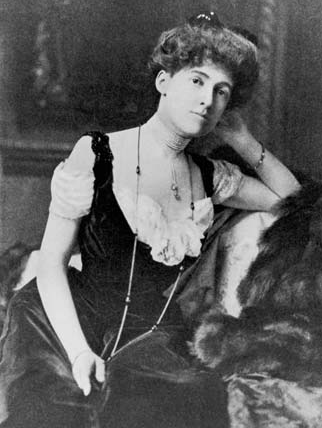
Figure 1. EW was as poised in her letters as she is in this photograph.

After reading so many letters to as well as from Edith Wharton last month at the Beinecke Library, I had a few thoughts, not all of them reverential, on writing letters to Edith Wharton.

First of all, her letters are a joy to read because her command of the language is–can I say perfect? Even if you can’t make out a word at first, you know that the sentence is grammatical and that the defect lies in your ability to read her handwriting, not in the letter itself. This is immensely helpful in deciphering the letter and also an inspiration to the rest of us, who’ll then resolve to write more gracefully.

But suppose that you’re one of her contemporaries, and you want to write a letter to her. What then?

With apologies to Wharton scholars for the hasty generalizations below, here are a few tips:

  1. If you’re a close friend or family member, you’ll know the right tone to take, and the exchange will be friendly, funny, and great to read.
  2. If you’re an editor with whom she has a good professional relationship, such as Edward Burlingame or Rutger Jewett, you can expect friendly and witty letters as well as the immemorial authorial complaints about sales and advertising and the number of periods to use in an ellipsis.  Let’s just say that Mrs. Wharton and common sense do not agree with current recommendations from the Modern Language Association.
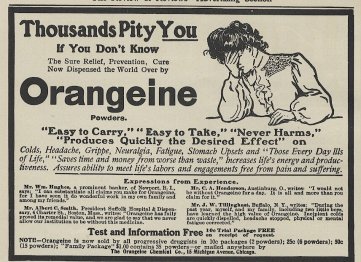
  3. orangeine

    Figure 2. Lily Bart might have been marginally safer with Orangeine than chloral hydrate, although it, too, could be deadly.

    If you’re a random fan, she might keep your letter, as she did the one from the president of the Orangeine Company, who was delighted to see her mention the product in The House of Mirth and in effect offered her an endorsement deal, if I remember correctly. Needless to say, she didn’t comply.

  4. If you’re trying to get her to address your book club, autograph a copy of a book, give her an award (except the Pulitzer Prize), give you a few pithy words explaining her literary philosophy, or any of the other requests that famous authors must get by the thousands, the answer is no.  You might get a frosty but polite letter back from her secretary, roughly as follows: “Mrs. Wharton never speaks in public,” “Mrs. Wharton has made it a rule to reserve autographs for her close friends,” or  “Mrs. Wharton appreciates the honor but is unable to attend,” etc.
  5. If you’re a member of a literary rights agency such as Curtis Brown, most of the time you will have to address your correspondence directly to “Mrs. Wharton,” but all the letters you receive will be from her secretary and will begin “Mrs. Wharton begs me to remind you” or another such phrase. In other words, you have to talk directly to her, but she responds through a secretary–which, if you think about it, makes sense given the constraints on her time. Screen Shot 2017-04-25 at 8.59.41 AM
  6. If an underling or someone unfamiliar with Wharton slips and addresses her as “Miss Wharton”–you will certainly hear about it, and not in a good way.

The peak “letter to Wharton” experience may be this one, which is at the Lilly Library. It’s  a form letter written to EW from GLOBE: THE INTERNATIONAL MAGAZINE, dated Aug. 6, 1936. It begins “Dear Miss Wharton: Will you write for us?” and asks her to write a short, “intimate” piece for the magazine.  It concludes, “We hope you will go to bat for us. … the deadline was yesterday.”

I’d love to have been a fly on the wall when Mrs. Wharton read this one.

“Edith Wharton’s Two Worlds” opening lines

Opening paragraphs of “Edith Wharton’s Two Worlds,” the Humanities Fellowship talk I gave last night.

To begin this talk, I’d like you to imagine a time when the United States, one of the wealthiest and most powerful nations on earth, was not so much one nation as two. It was a deeply divided country economically and politically, with millions of families living in rural or urban poverty while the wealthy paid little or nothing in taxes and lived in the utmost luxury. In this time you’re imagining, workers were driven from their jobs by increasing mechanization and by anti-union and anti-strike actions that spilled over into violence. Lax regulations on manufacturing meant that industries could pollute air and water and that workers would receive little or no compensation for their injuries. Families lost their homes and were forced into poverty and onto the streets by the financial shenanigans of the corporations who bought off state and federal legislators to ensure that government regulations, such as they were, would never touch them.

In this imagined time, there was rampant prejudice against immigrants from the east, who were deemed suspicious because of their “foreign” religious practices and fears that these immigrants would owe allegiance to the head of their religion rather than to the United States. Unrest in their home countries also meant that many immigrants were branded as politically volatile and prone to violence and terrorist acts.

In addition to conflicts over religion and immigration, in this imagined America Anti-Semitism was common, expressed at the highest levels of society, and enforced through restrictive covenants in housing and quotas to limit the numbers of Jewish students who could attend private universities. Racism was on the rise, including incidents of violence, and state legislatures in the South devised restrictions that made it harder for African Americans to vote. Goaded by the media and by strong celebrity personalities who used emerging media to stir up and unify their followers, white nationalist parties, some previously dormant like the KKK, gained legitimacy and power, playing on fears that immigrants would steal their jobs and change the character of the nation.

And in this imagined America, the position of women was not equal to that of men: they were barred from many occupations, discouraged from pursuing higher education, made less money than men, had no legal access to birth control and abortion, and were subject to abduction and sexual slavery.

This imagined America may seem familiar, even contemporary, but the world I’m talking about is that of Edith Wharton (1862-1937).